
Ferrari Museum in Maranello. Part 3
The Final Part of the Museum Walk
At last, I found the time to complete the third and final part of this virtual walk through the Ferrari Museum in Maranello. For those arriving directly at the closing chapter, it makes sense to begin with Part 1 and Part 2.
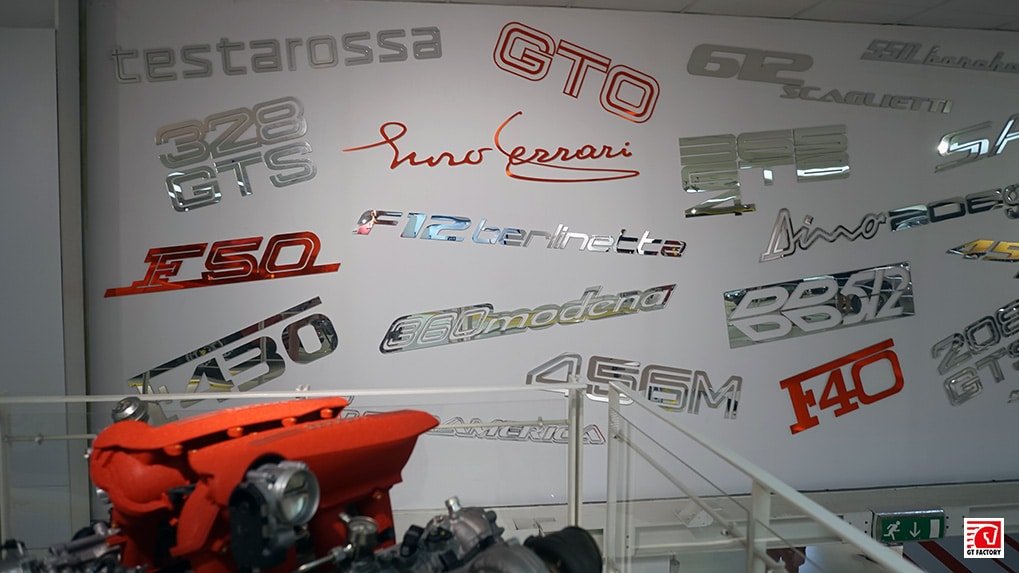
As in most automotive museums I have visited, the Ferrari Museum follows a familiar tradition. That includes BMW in Munich, as well as Porsche and Mercedes-Benz in Stuttgart. Here too, there is an installation built around the logos and names of key models.
Limited Road Cars and Special Series
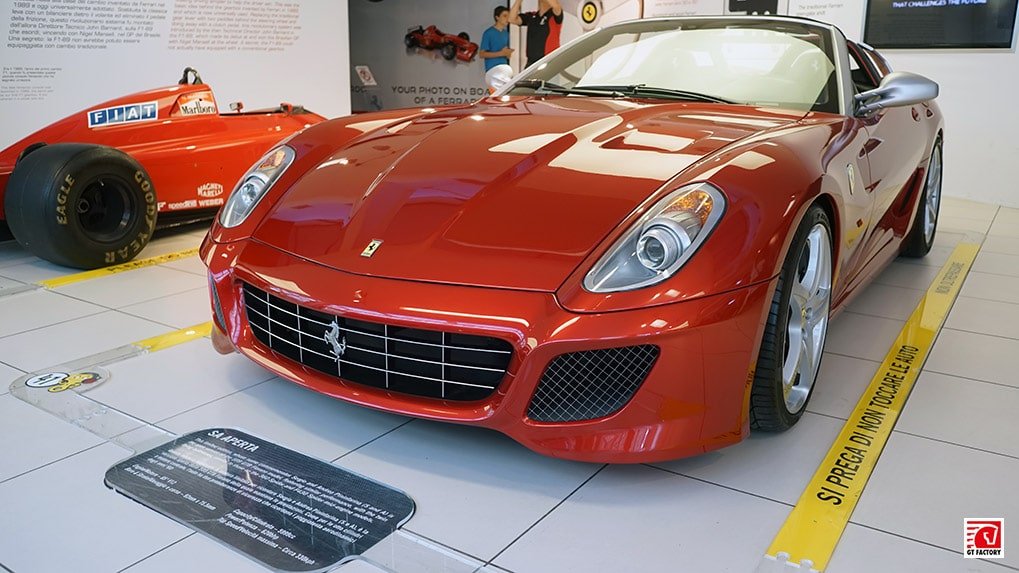
One of the rarer cars for my part of the world was the Ferrari SA Aperta. It is an open version based on the 599 GTB Fiorano. This fully developed roadster was limited to just 80 examples. It used a manually fitted soft top for bad weather and was first shown at the 2010 Paris Motor Show. The number 80 was chosen deliberately, as it marked the 80th anniversary of Pininfarina.
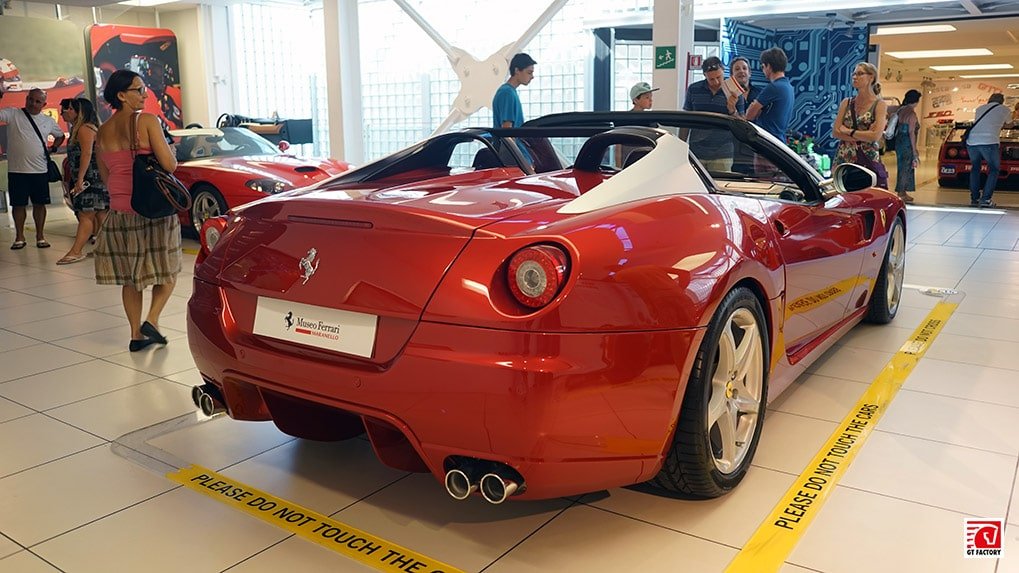
The “SA” in the name refers to Sergio and Andrea Pininfarina. Their design studio is closely tied to many of the most successful cars born in Maranello. The SA Aperta uses a front-mounted 5,999 cc V12. In this case, output is 670 hp and 620 Nm of torque at 6,500 rpm. As a result, the car reaches 100 km/h in 3.6 seconds and a top speed of 325 km/h.
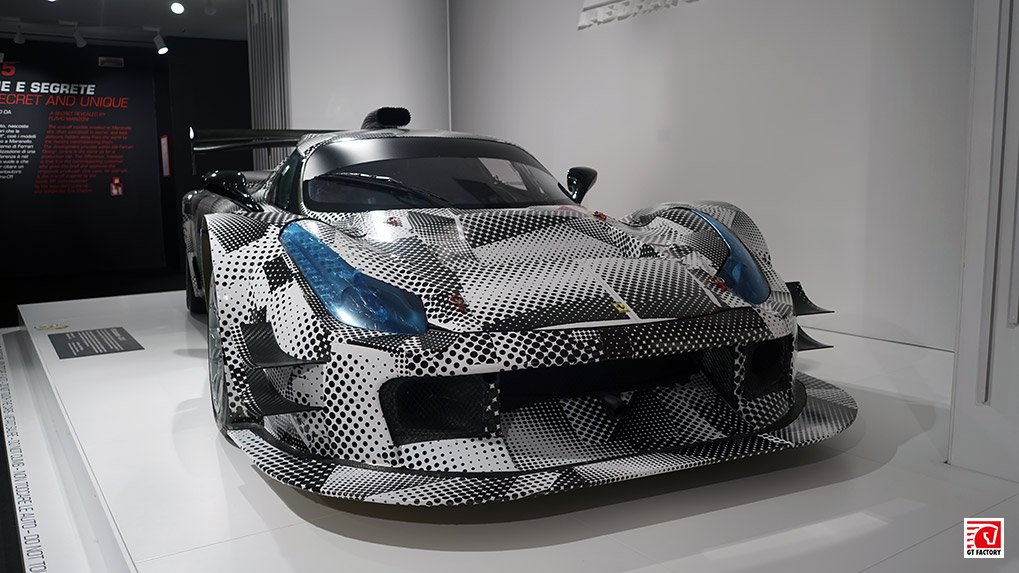
This car is called the Ferrari F150 Laboratorio. It is a development prototype used in the creation of the track-focused FXX K based on the LaFerrari.
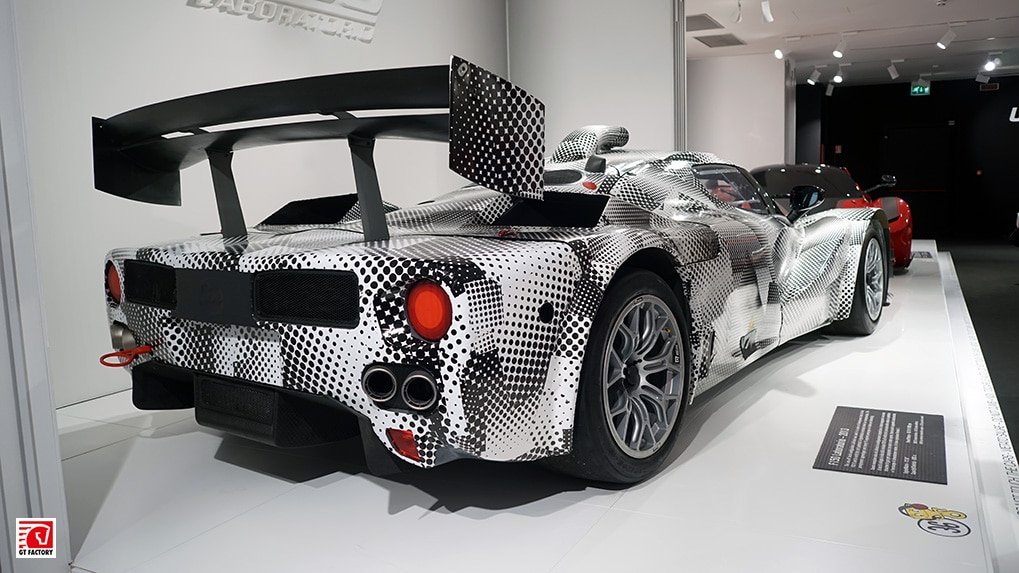
Notably, this prototype can only be seen at the Ferrari Museum in Maranello.
Track Machines and Aerodynamics
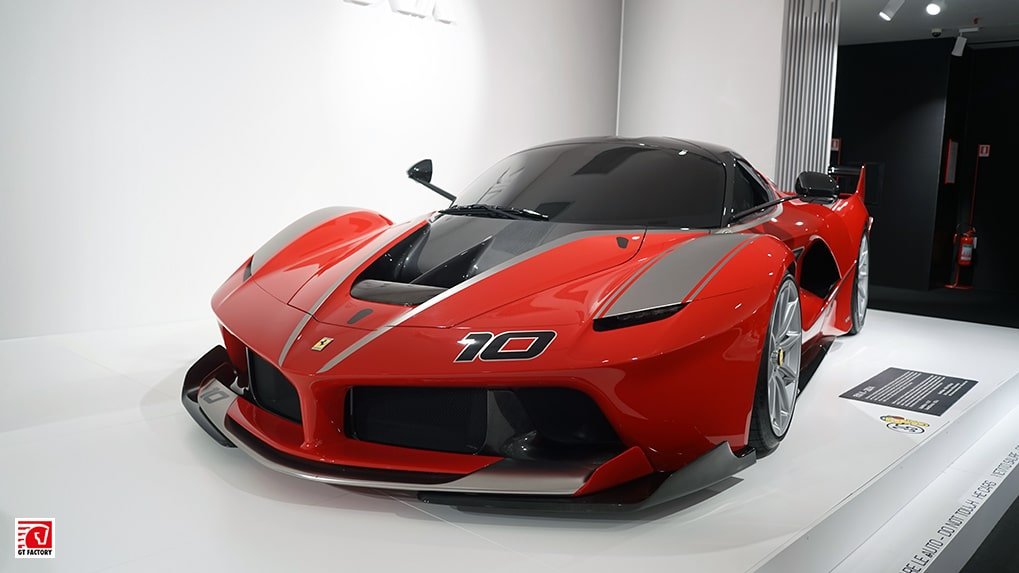
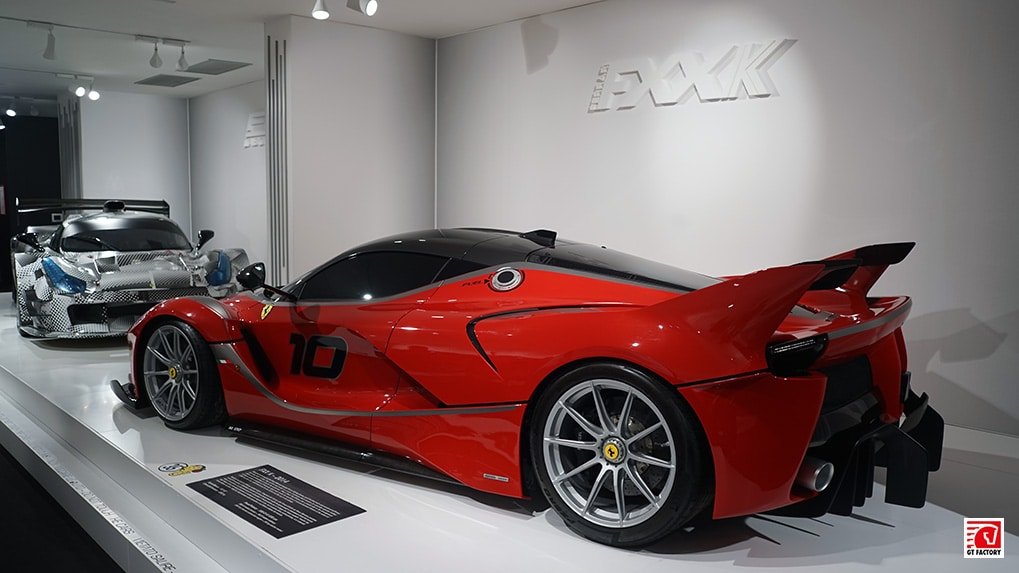
Built exclusively for the track, the Ferrari FXX K was designed by Flavio Manzoni and based on the road-going LaFerrari. In total, only 40 cars were produced.
The letter “K” in FXX K refers to KERS, or Kinetic Energy Recovery System. In this case, the hybrid powertrain produces a combined 1,035 hp. Of that figure, 848 hp comes from the gasoline V12, while the remaining 187 hp comes from the electric motor. Total torque is 900 Nm.
Particular attention was paid to aerodynamics. Many tuning enthusiasts tend to focus only on horsepower and torque. However, they often forget that a car also becomes harder to control at high speed without proper aerodynamic management. As a result, Ferrari’s aerodynamic specialists achieved an extremely effective level of downforce. In the case of the FXX K, it reaches 540 kg at 360 km/h.
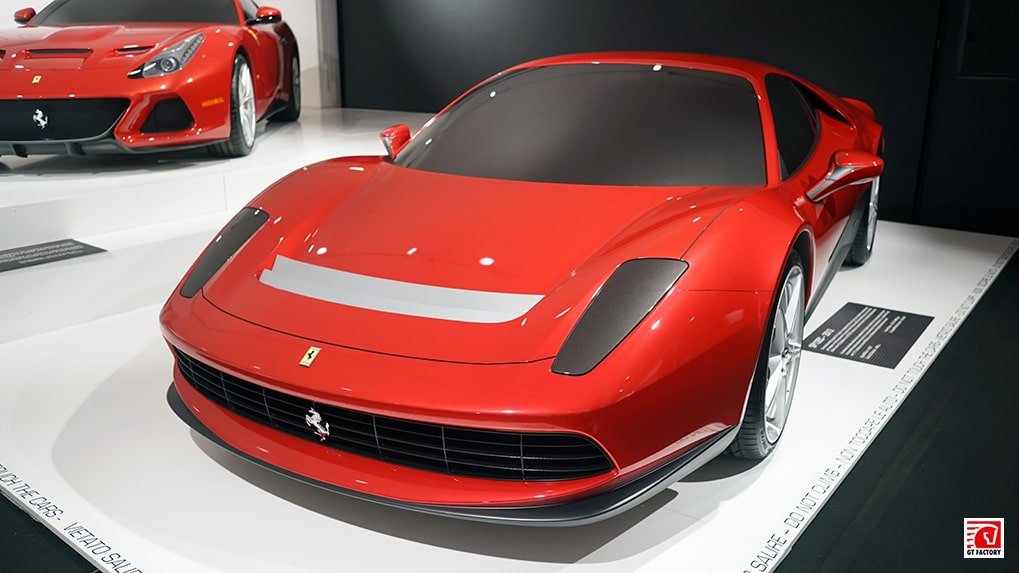
But enough about track machines and technical figures. The next hall moved into the world of one-off cars. The Ferrari SP12 EC, seen here, was built as a special commission for Eric Clapton. The car was based on the 458 Italia. Its reported cost was around 4.75 million euros.
One-Off Ferraris
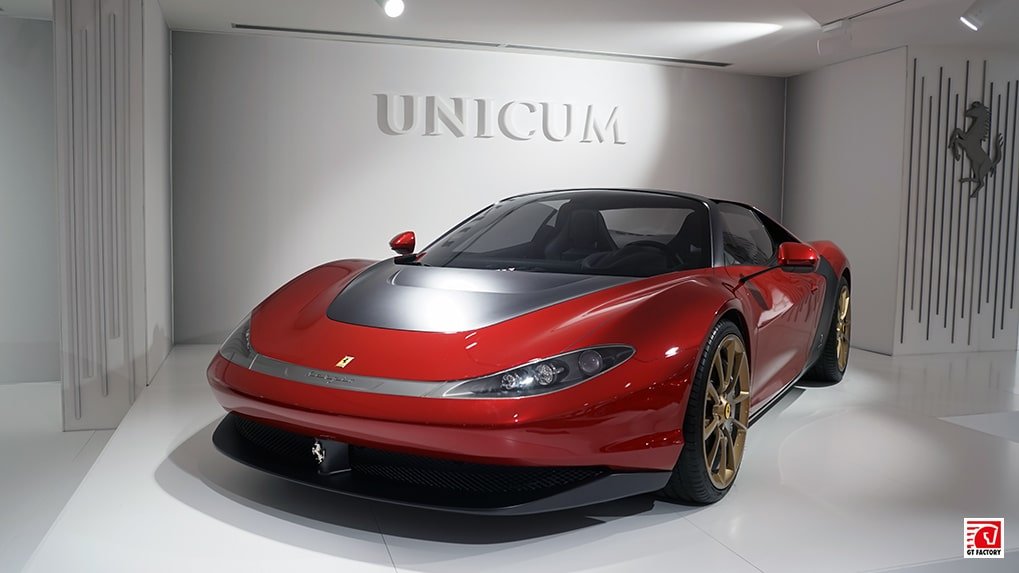
This Ferrari Sergio from 2013 was also presented as a one-off at first. Later, in 2014, the Sergio was produced in a small series of six cars with some changes.
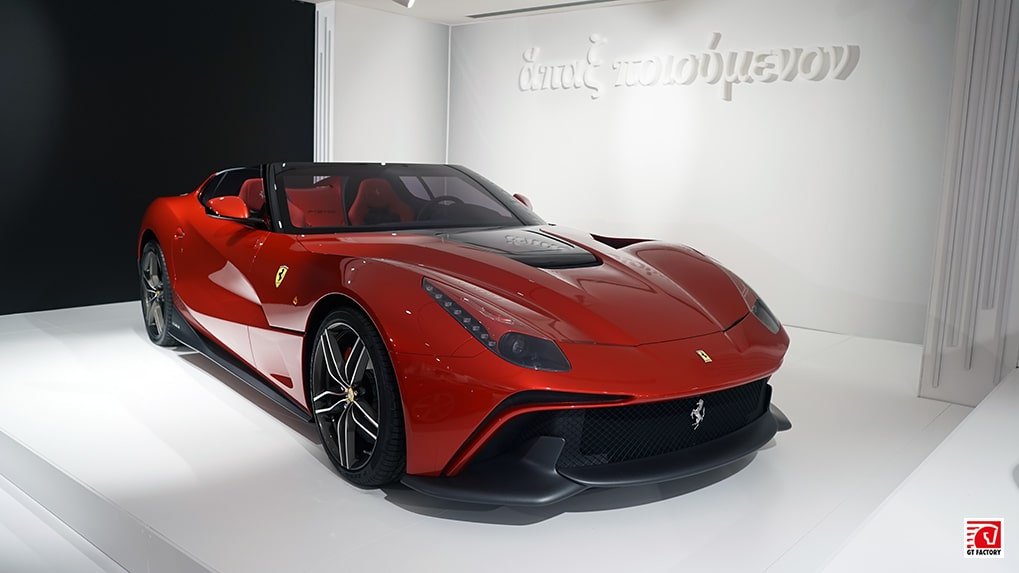
You can see this Ferrari F12 TRS only in a museum; it was built based on the F12 Berlinetta as a one-off commission through the Special Projects program. Its Barchetta body was designed by Flavio Manzoni and inspired by the 1957 250 Testa Rossa. The car was first shown in Sicily during the 2014 Ferrari Cavalcade.
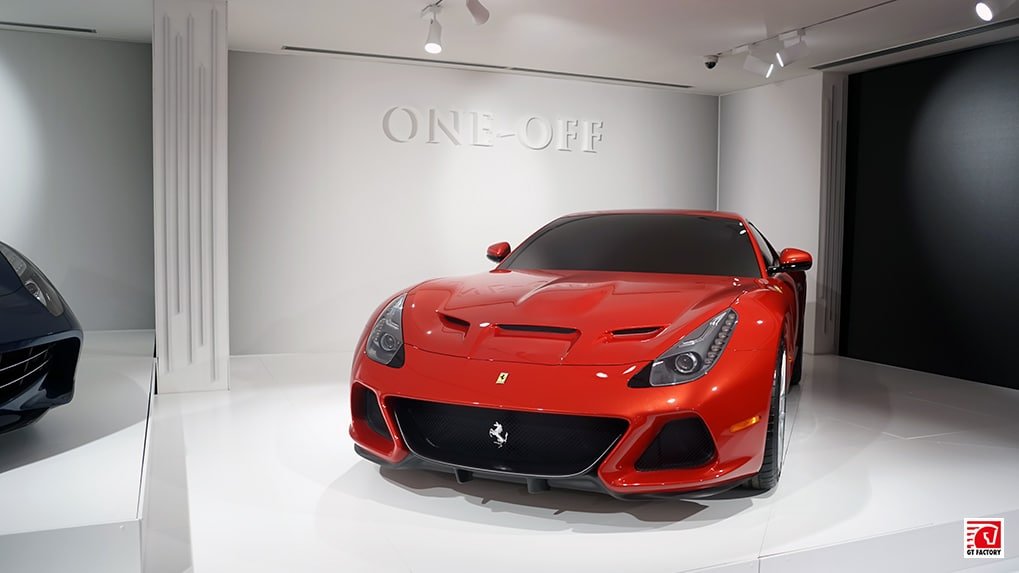
Similarly, the Ferrari SP America was also created as a one-off through Ferrari’s Special Projects program.
LaFerrari Development and Design Process
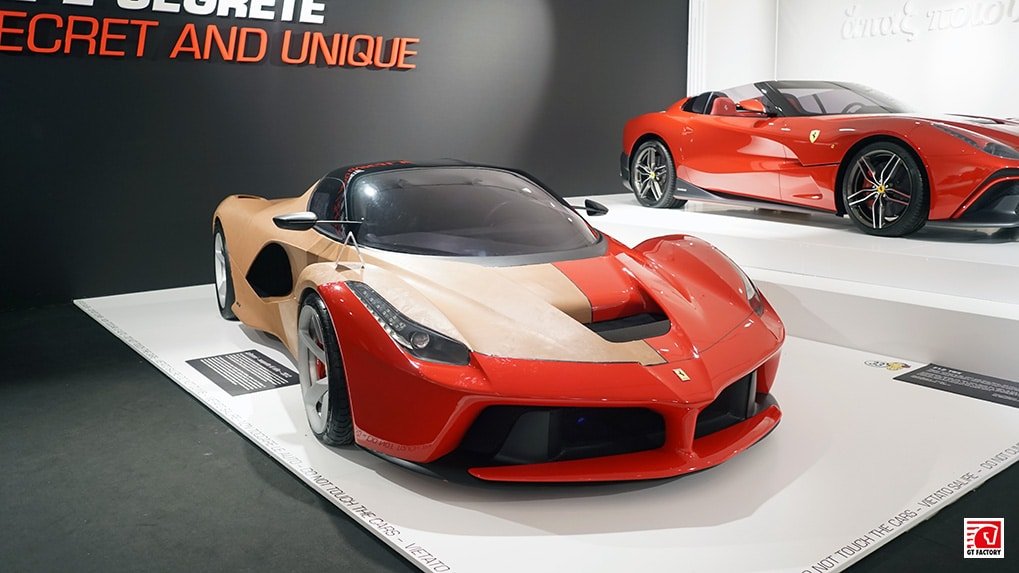
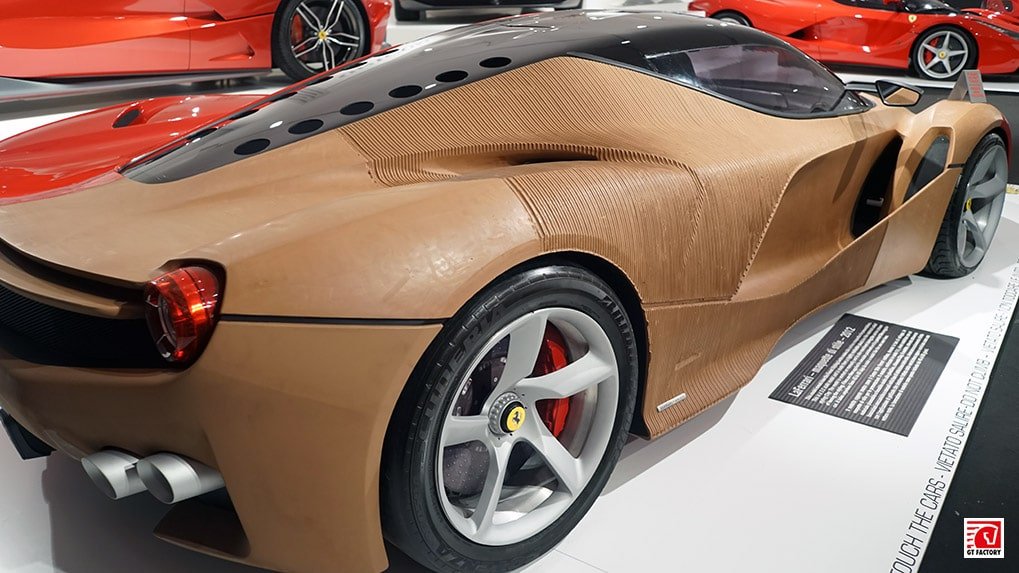
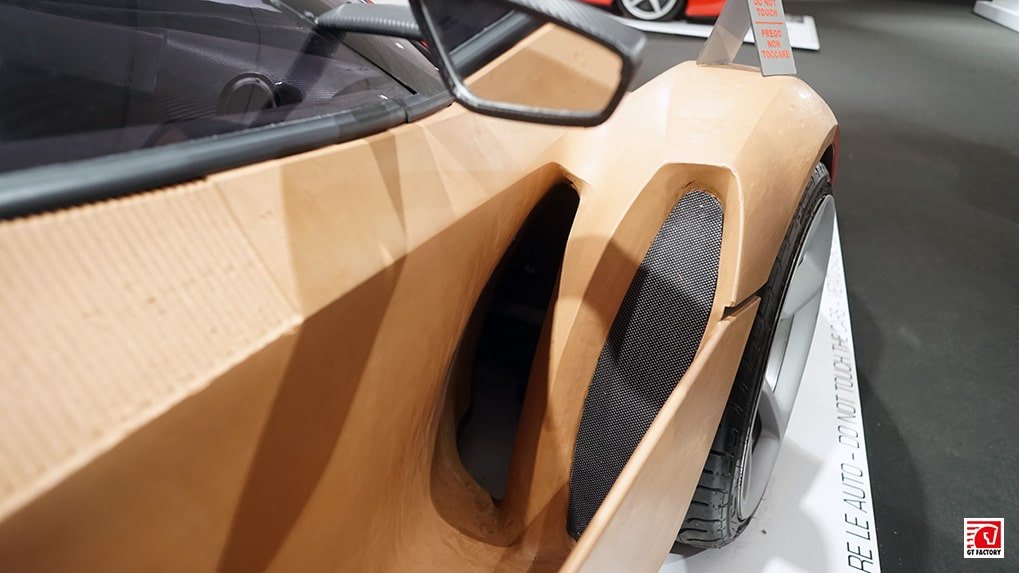
A full-scale development model of the LaFerrari was another especially interesting display. It was presented in a very effective way. In other words, the museum showed different stages of the process behind a full-size design model.
On the left side, there is a finished painted body. On the right, there is industrial clay in several stages of development.
Today, cars are largely designed on computers. Because of that, methods like this may soon survive only in books and museums.
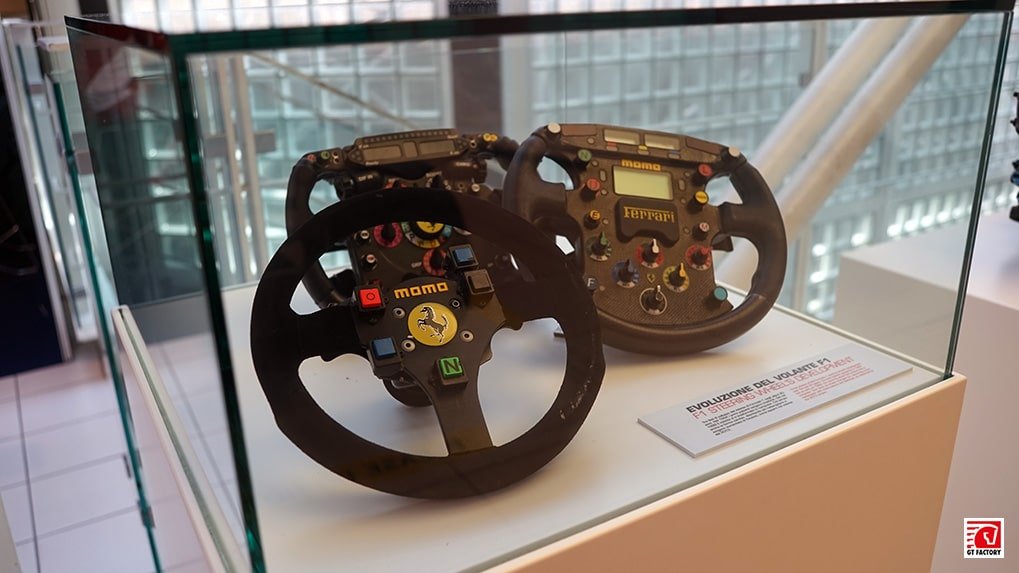
Another familiar stand, seen in many automotive museums, shows the evolution of the Formula 1 steering wheel.
LaFerrari and the Final Hall
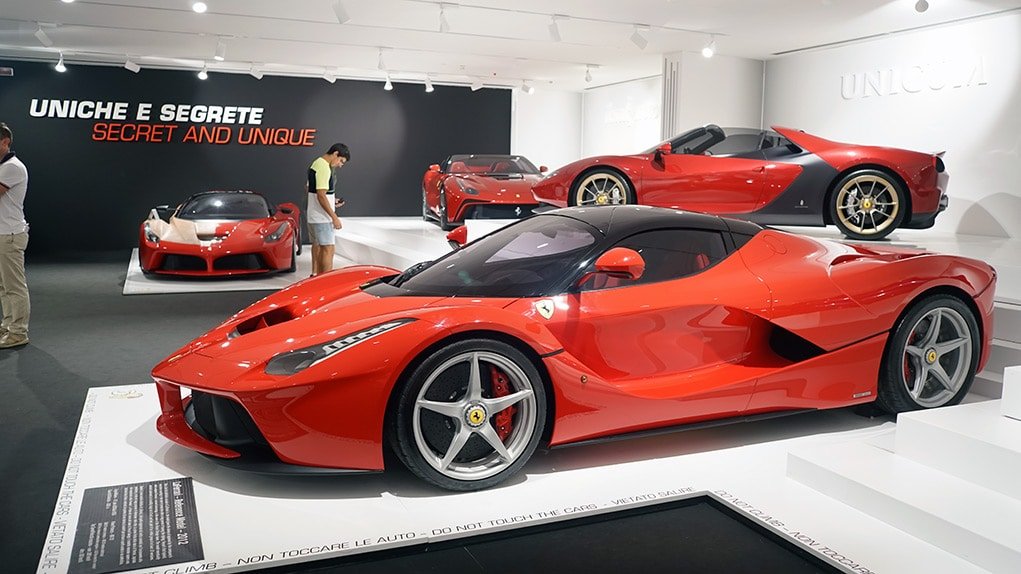
Ferrari’s first hybrid hypercar, the LaFerrari, was also known internally as the F150 project. It was first presented at the 2013 Geneva Motor Show. Production was limited to 499 cars.
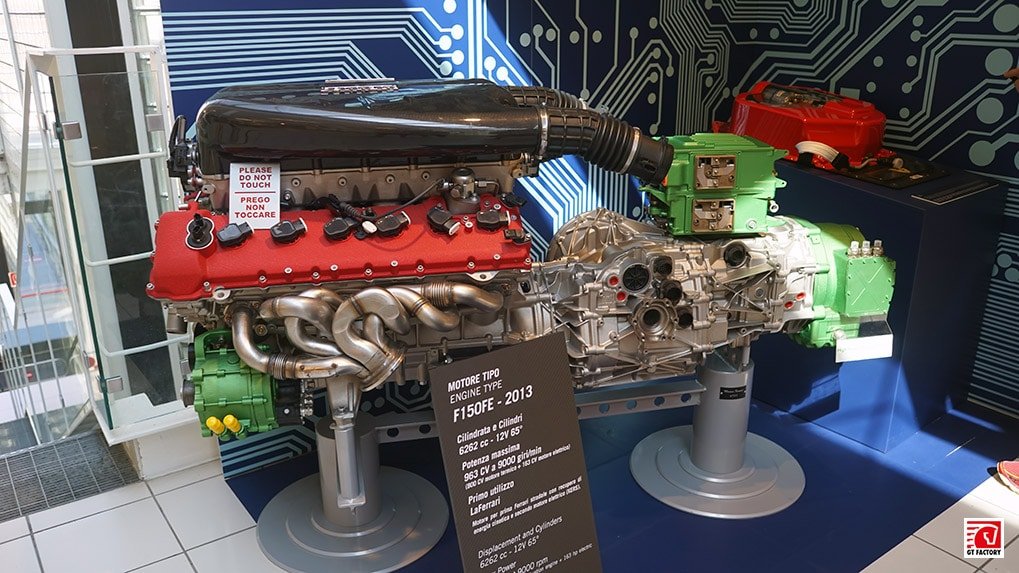
This engine is the heart of the LaFerrari. Combined output from the 12-cylinder V-shaped gasoline engine reaches 800 hp. In addition, the HY-KERS unit, or simply the electric motor, adds 163 hp. Together, they produce 963 hp.
Take a close look at the exhaust manifold and the flex sections in the runners, used to reduce stress. Details like that are exactly what I find fascinating.
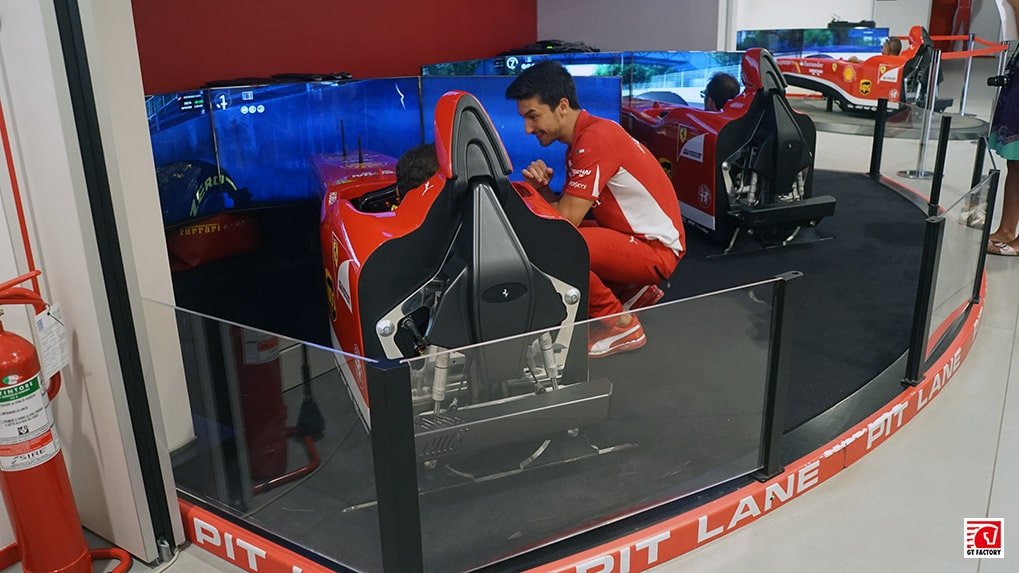
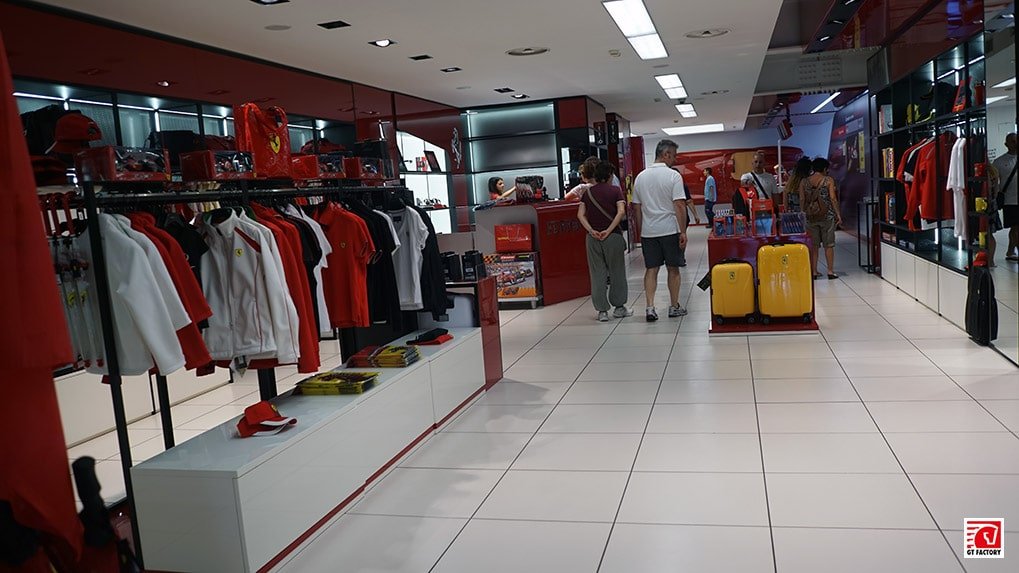
Near the end of the exhibition, there is an interactive hall with Formula 1 simulators. And, of course, no museum would be complete without a shop full of branded items and souvenirs.
With that, this walk through the Ferrari Museum in Maranello comes to an end. Still, the conversation about automotive history is far from over.
Part of the historical background in this entry was adapted from public reference sources, including Wikipedia and AutoWP, and reworked into GT Factory’s editorial format.
Follow GT Factory on Tumblr and Instagram to stay up to date with future Journal entries.