
Ferrari Museum in Maranello. Part 2
Back Inside the Museum
While in Bologna, missing the Ferrari Museum in Maranello would have made little sense. So I made sure to visit it. This entry continues the museum walk and picks up where Part 1 left off. Those who missed the beginning of the visit can catch up here.
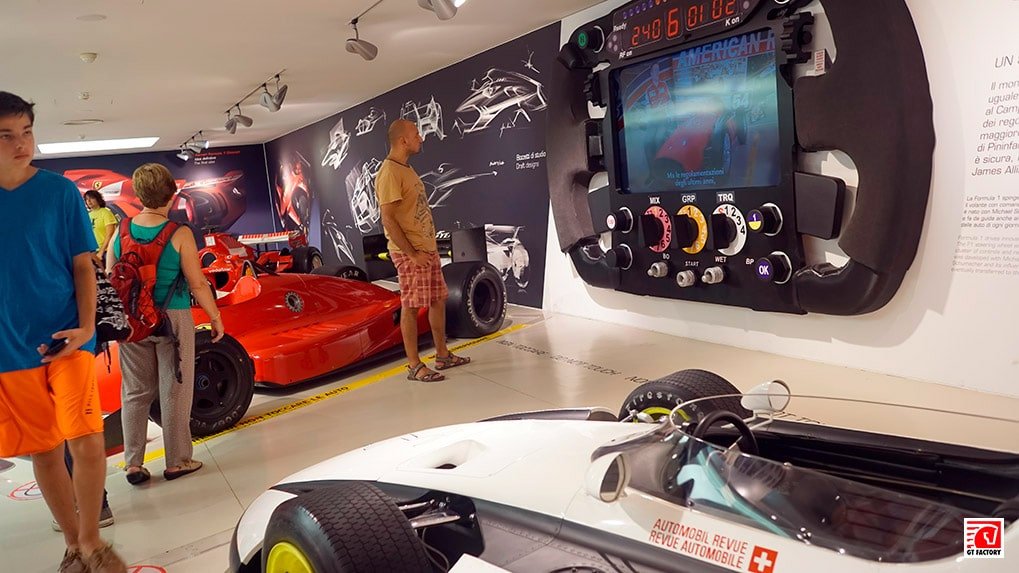
In Part 1, I already mentioned that the Ferrari Museum includes many interactive exhibits. This steering wheel display is a simple but very clear example of that distinctly Italian approach to presentation.
Ferrari FF and the Road to 4RM
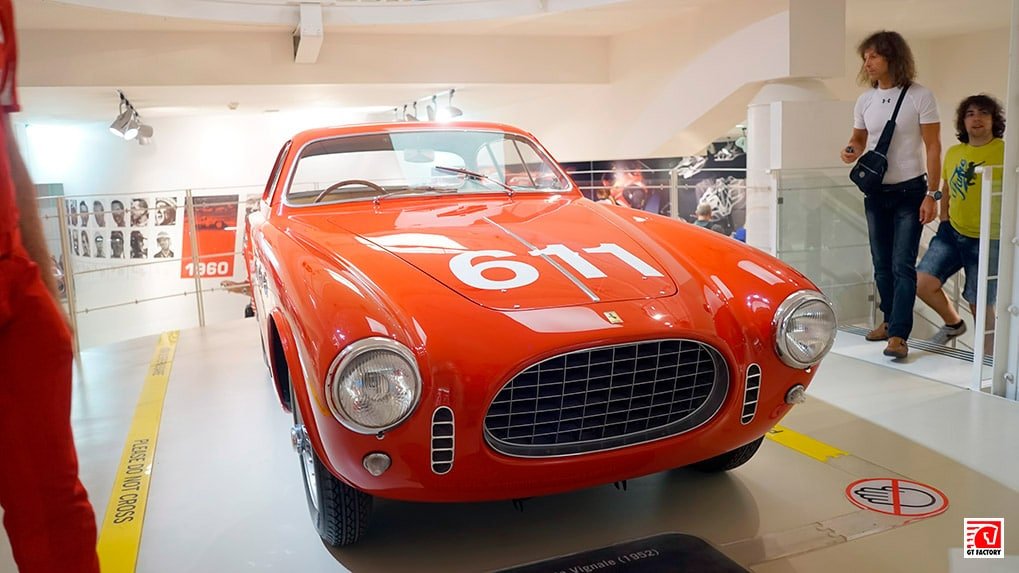
Near the entrance to the second floor stood a Ferrari 225 S Vignale. It can be seen as one of the predecessors to the famous 250 series. Built in 1952, the 225 S also appeared in events such as the Giro di Sicilia. In addition, seven examples with the larger 250 S engine took part in the Mille Miglia. It also became the first car ever tested at the Enzo and Dino Ferrari circuit.
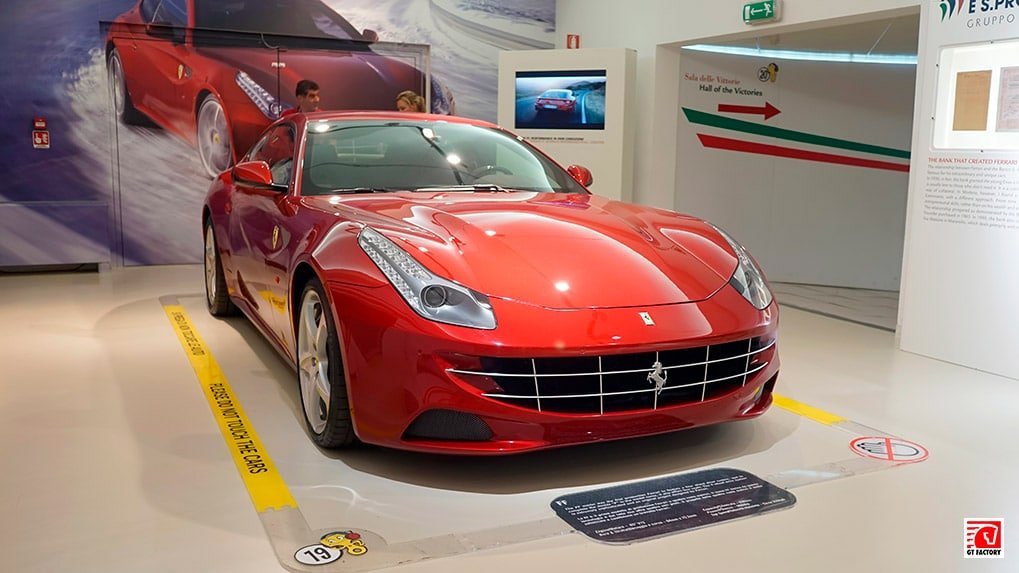
At the time, the Ferrari FF was still part of the current model range. However, its replacement was already on the horizon. FF stands for Ferrari Four, meaning four seats and four driven wheels. It used the largest-displacement engine Ferrari had ever installed in a production car at that point. More specifically, it was a naturally aspirated 6.3-liter V12 with a 65-degree bank angle. Output was 660 hp at 8,000 rpm and 683 Nm of torque at 6,000 rpm.
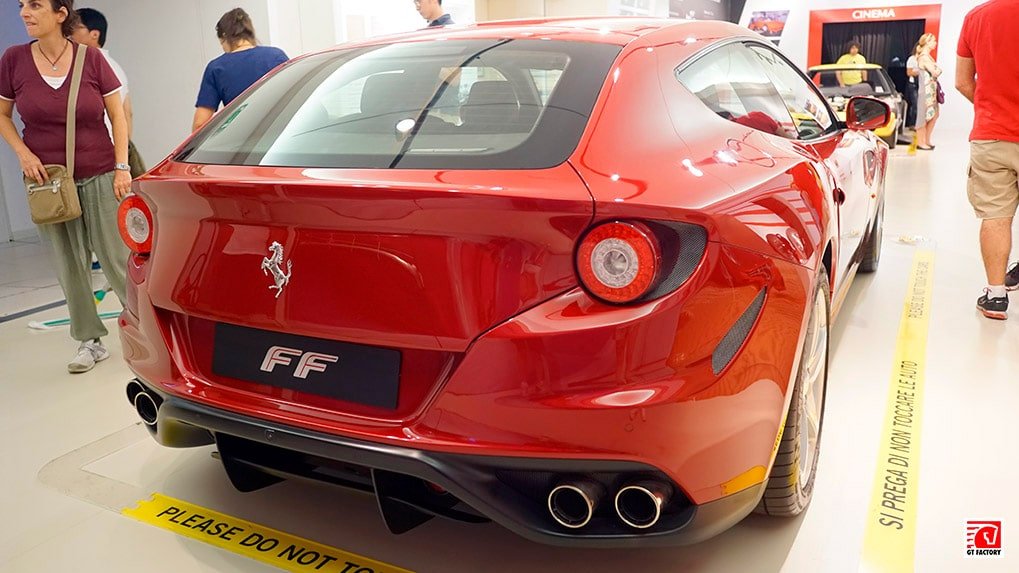
The FF was equipped with a 7-speed dual-clutch DCT transmission. It was similar to the units used in the Ferrari California and Ferrari 458 Italia.
Ferrari’s patented all-wheel-drive system was called 4RM. It was nearly half the weight of a conventional comparable setup. In addition, it was designed to distribute torque intelligently across all four wheels. However, it only operated when the driving mode selector was set to Comfort or Snow. Otherwise, the FF remained a classic rear-wheel-drive Ferrari.
The 408 4RM Prototype
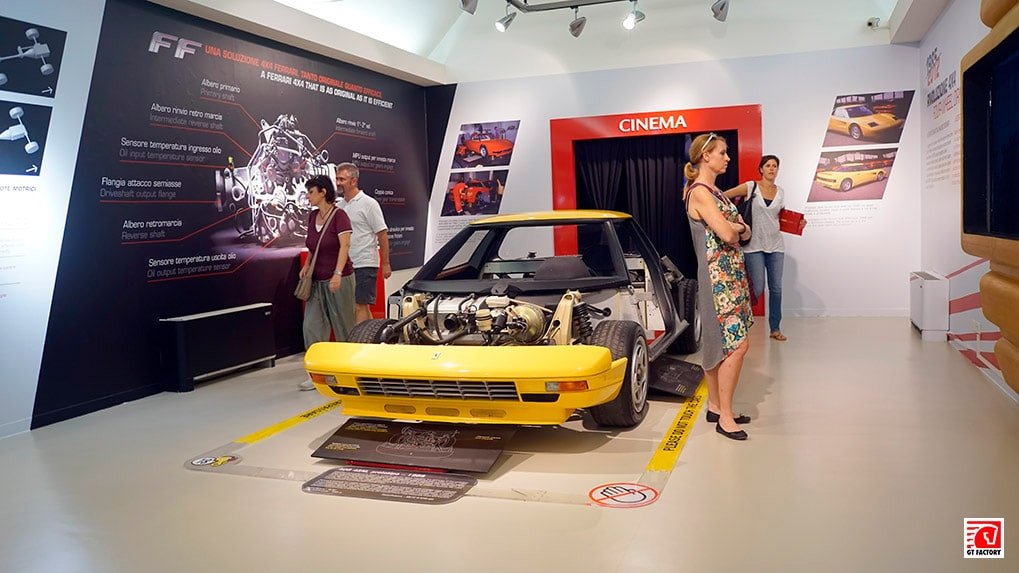
The Ferrari 408 4RM concept was developed and built between 1987 and 1988. It became Ferrari’s first all-wheel-drive experimental car. To make the project possible, Ferrari used a then-advanced transmission layout with a hydraulic clutch system.
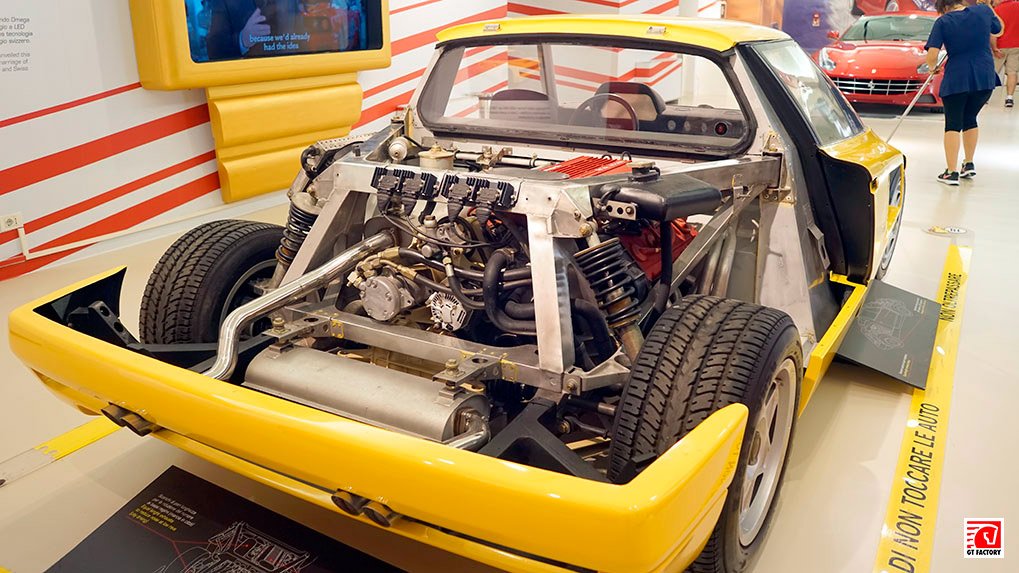
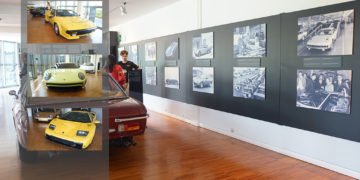
Only two examples were built. First, a red car appeared in June 1987. Then, a yellow one was completed in September 1988. Today, both can be seen at the Ferrari Museum. On this visit, I photographed the later yellow example.
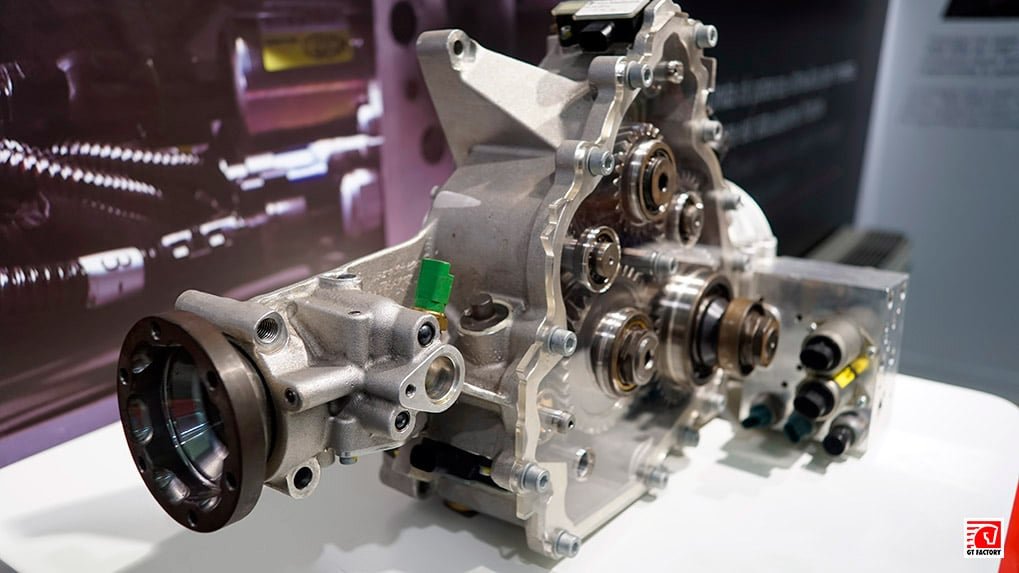
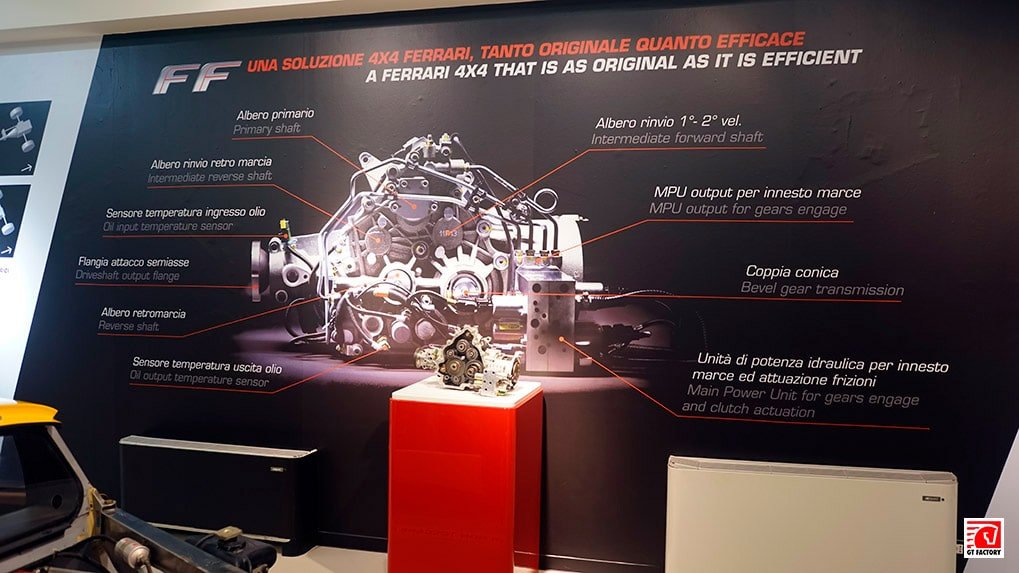
These two exhibits were linked by the same technical theme: Ferrari’s patented all-wheel-drive system. In that sense, the 408 4RM became an important intermediate step on the way to the modern four-wheel-drive Ferrari FF.
Formula 1 Glory
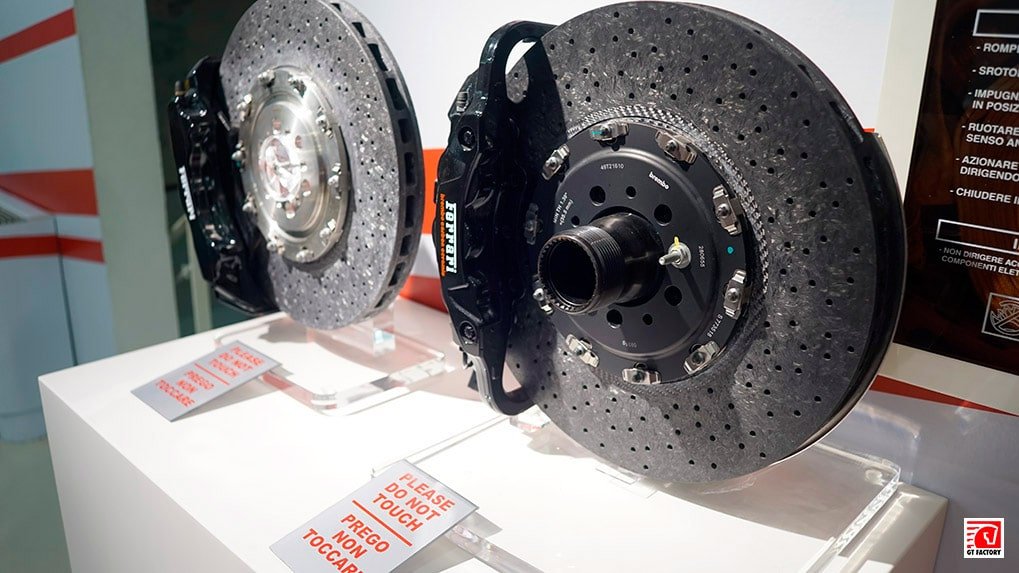
One of the technical stands displayed a carbon-ceramic braking system. In this case, it was shown both with a conventional multi-bolt hub and with a center-lock hub secured by a single nut.
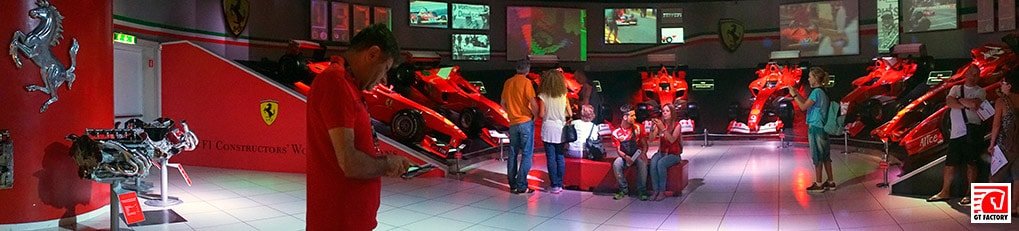
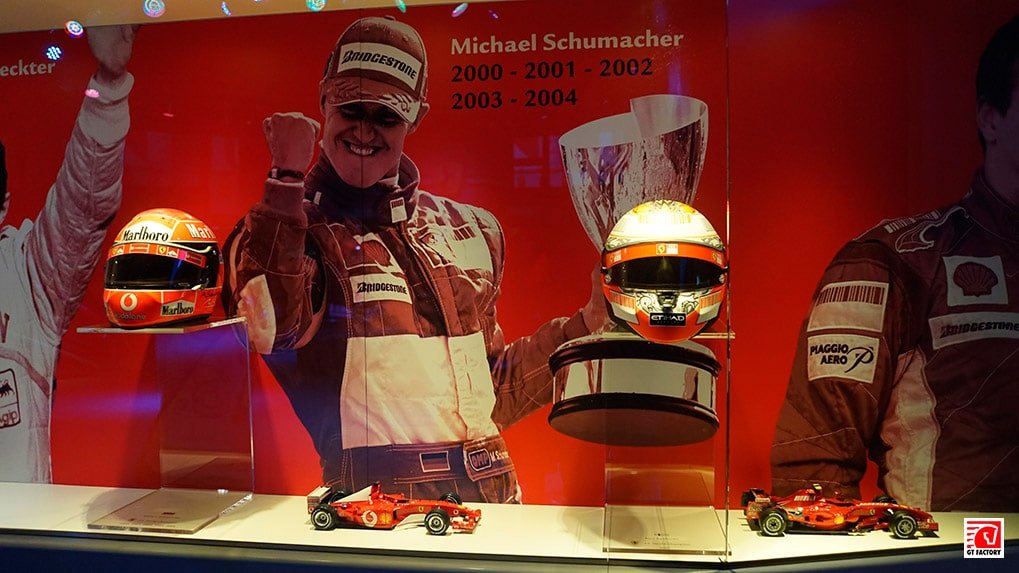
A separate hall is dedicated to Ferrari’s victories in Formula 1. On one side stood the title-winning race cars. On the other were the names of champions, helmets, and scale models. At the entrance, there was also a row of powerful engines. Together, they set the tone for the next section of the museum.
Modern Ferrari Engines
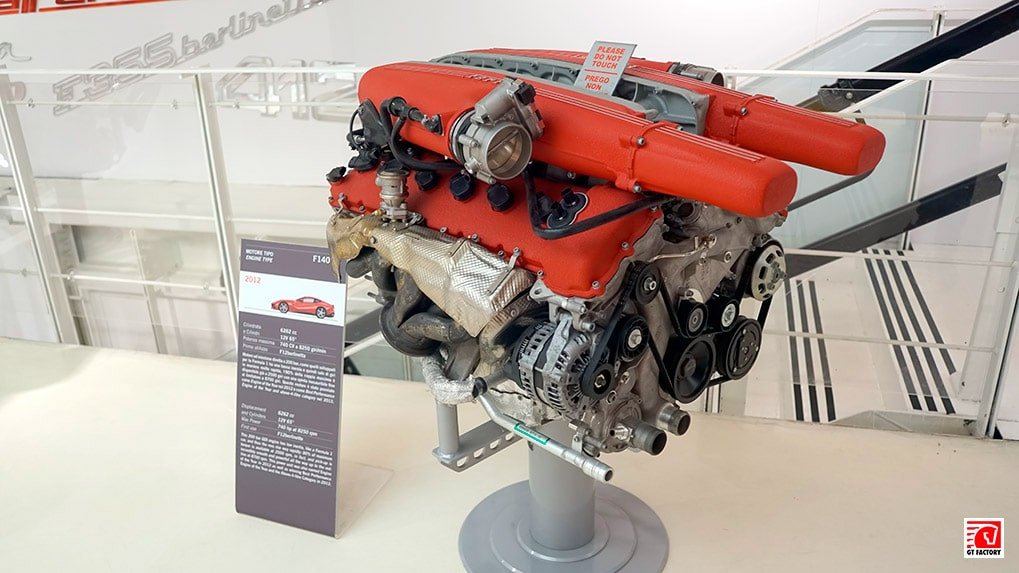
The next hall focused on modern engines for Ferrari road cars. One of the standout exhibits was the F140 engine for the Ferrari F12 Berlinetta. This naturally aspirated low-inertia V12 displaces 6,262 cc and delivers 80 percent of its peak torque from 2,500 rpm onward. Output is 740 hp. In 2013, it was recognized as the best high-performance engine above 4 liters.
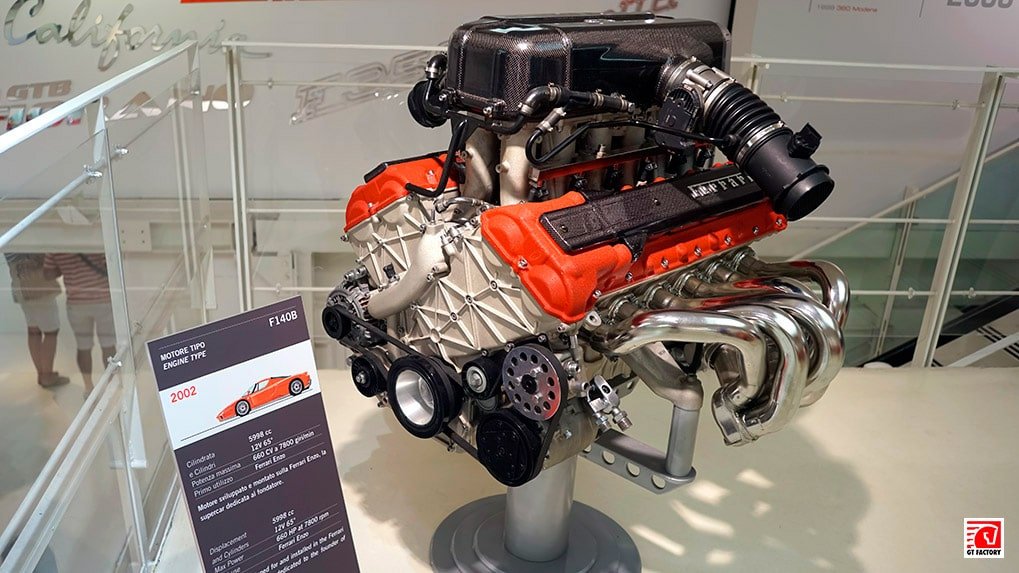
The F140B engine was developed specifically for the Ferrari Enzo, the car named in honor of the company’s founder. That alone already says a lot. Still, a few figures are worth mentioning: a 5,998 cc V12 producing 660 hp at 7,800 rpm.
Historic V12 GT Cars
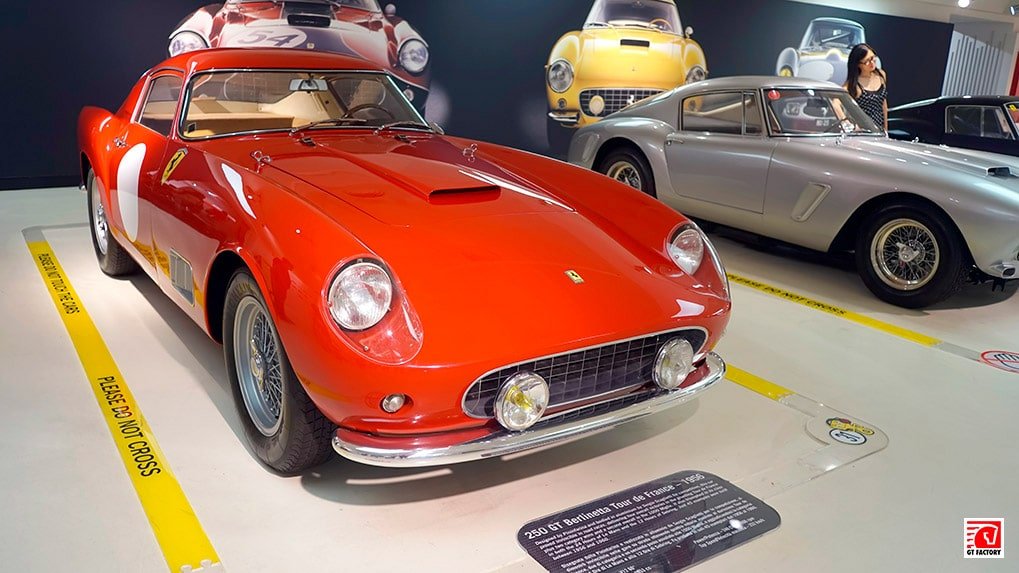
Why were these exhibits placed together? Most likely, the museum wanted to draw a direct line between historic models and their modern counterparts. A good example is the Ferrari 250 GT Berlinetta Tour de France and the then-new Ferrari F12 TDF, which had only recently been unveiled.
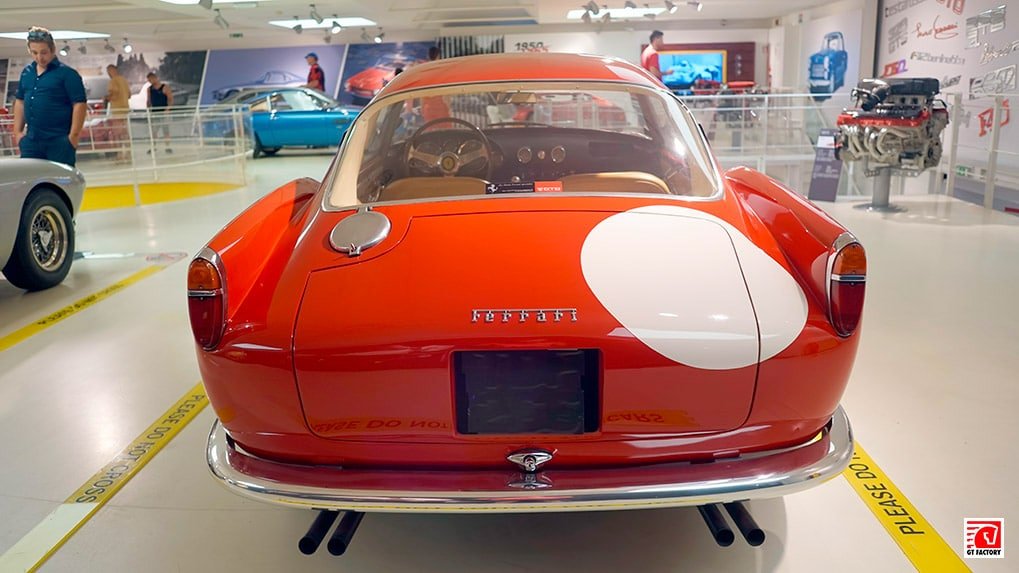
Can you see the resemblance? At the same time, this was one of the 250 series models, and like Ferrari’s flagship cars of later years, it used a V12 engine.
The car shown here was named after the ten-day Tour de France automobile event and was produced from 1956 to 1959. In total, only 84 examples were built. The design came from Pininfarina, while production was handled by Carrozzeria Scaglietti. Early cars developed 240 hp. Later, output was increased to 260 hp.
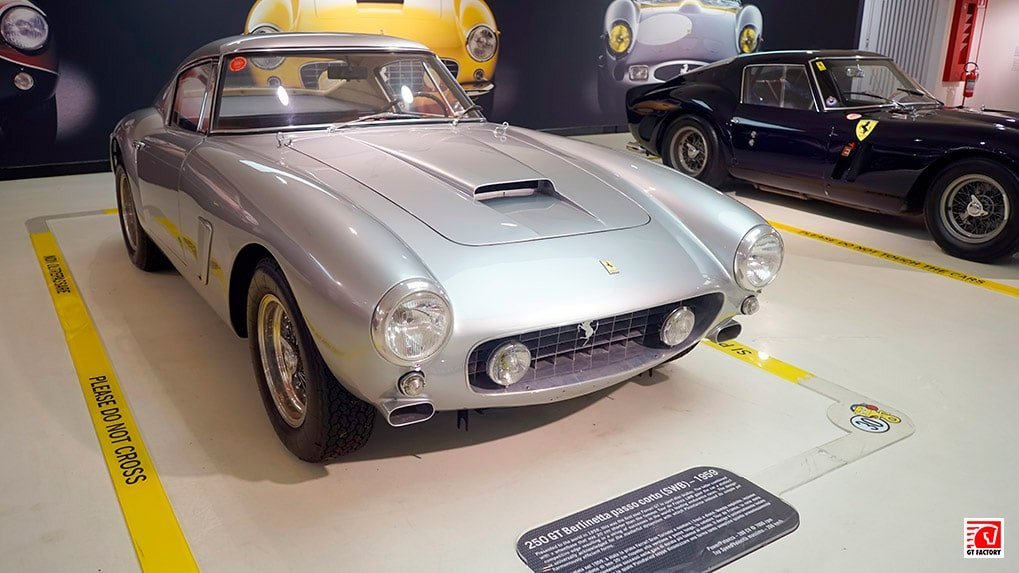
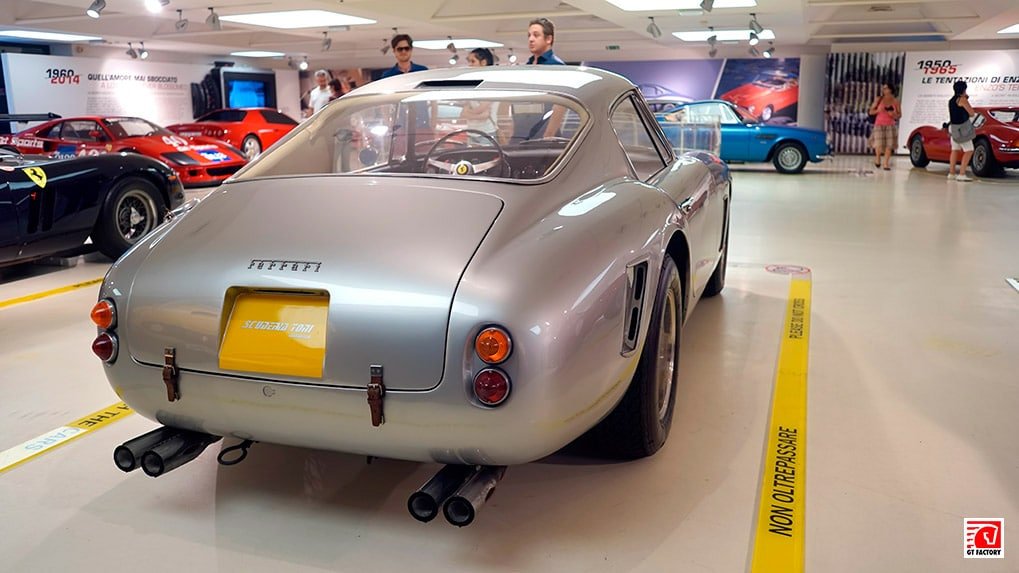
Another important exhibit was the 250 GT Berlinetta SWB with its short 2,400 mm wheelbase. Also part of the 250 series, it became one of the most respected GT competition cars of its era. A total of 176 examples were built in both road-going Lusso form and racing specification. Ferrari used combinations of steel and aluminum bodywork, while engine output ranged from 240 to 280 hp depending on version.
During development of the 250 GT Berlinetta SWB, Ferrari involved experienced racing figures such as Giotto Bizzarrini, Carlo Chiti, and the young Mauro Forghieri. All of them would later be connected with the 250 GTO as well. This was also the first Ferrari GT racing car to receive disc brakes. Low weight, strong power, and balanced suspension made it highly competitive. The model was first shown in Paris in October 1959.
The 250 GTO and the Value of Rarity
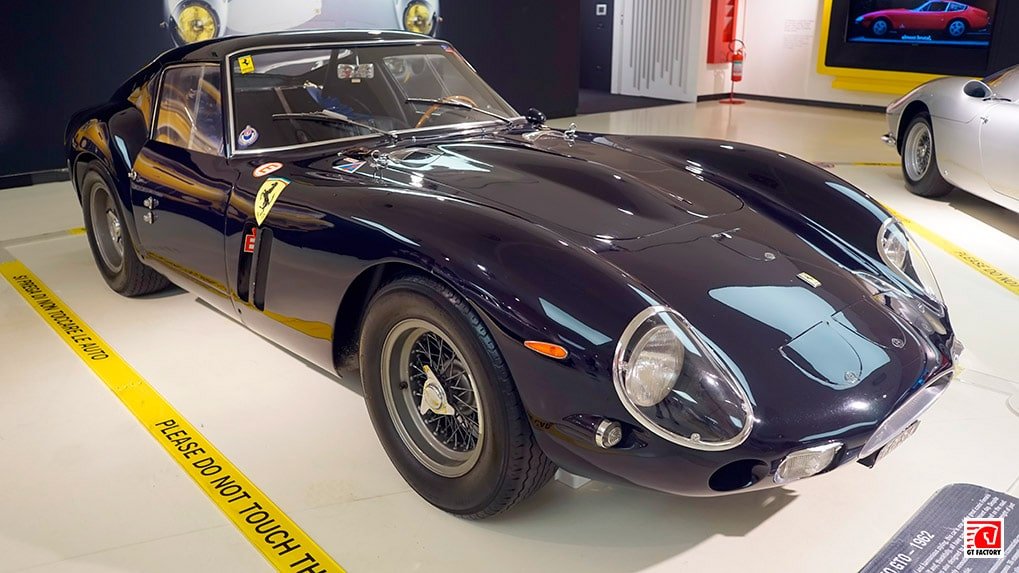
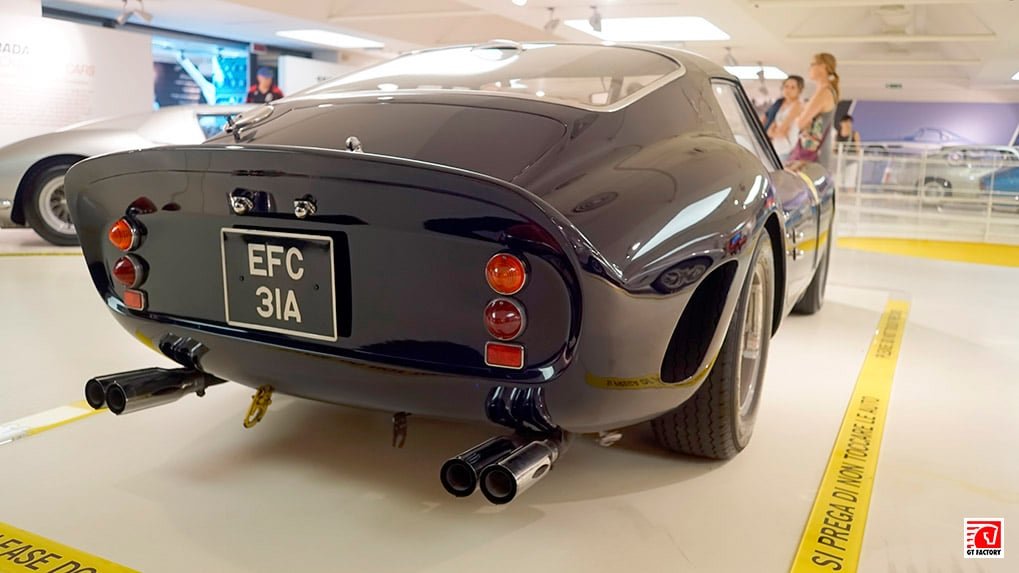
Unlike the previous two exhibits, the Ferrari 250 GTO was built purely for competition. This version of the Ferrari 250 was a gran turismo machine developed from 1962 to 1964 for FIA GT3-class racing.
Today that racing category is associated with 458-based cars, but the meaning of the GTO name remains important. The first part refers to the displacement of each cylinder in cubic centimeters. The second part stands for Gran Turismo Omologata — essentially, a grand touring car homologated for racing.
A new 250 GTO cost around $18,000 in the United States at the time, and the buyer had to be personally approved by Enzo Ferrari and his North American representative, Luigi Chinetti. Between 1962 and 1963, Ferrari built 33 cars. Then, in 1964, a slightly revised second series appeared. Only three original second-series cars were produced, while four earlier cars later received the updated bodywork, bringing total production to 36. Today, the 250 GTO is one of the most valuable cars in the world, with one example famously selling for around $52 million.
From GT Homologation to the 250 LM
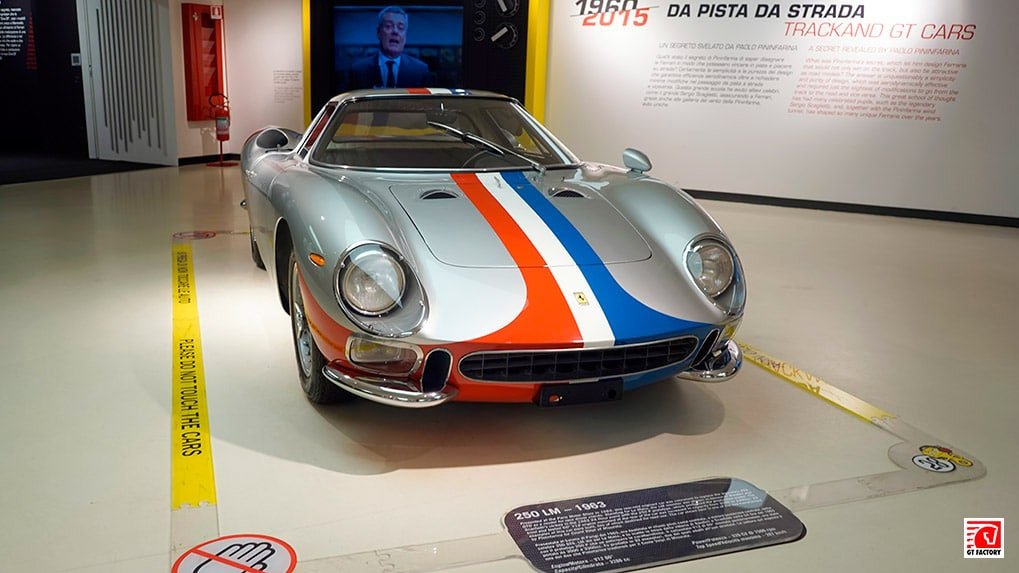
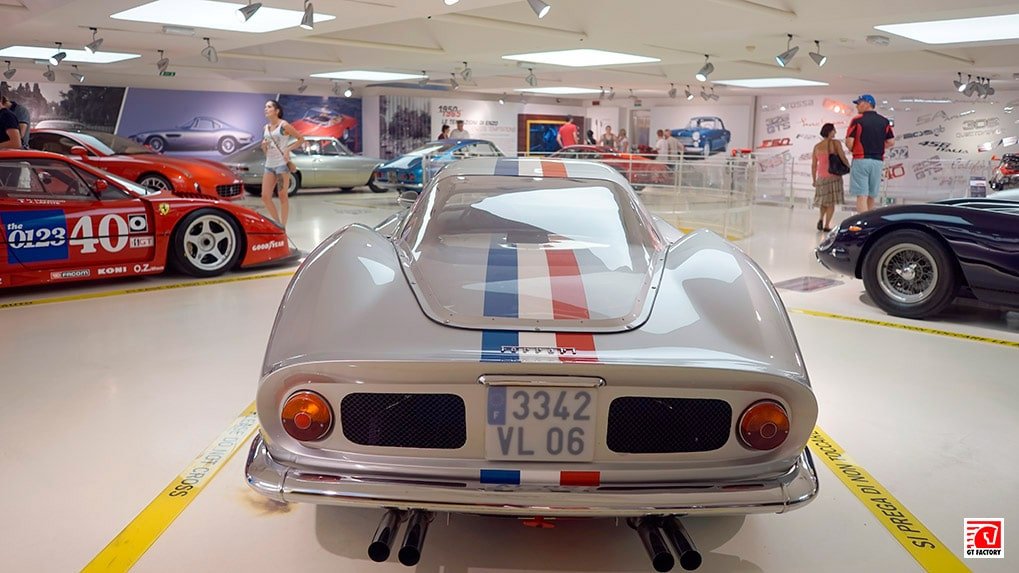
This elegant car is the Ferrari 250 LM, built around a mid-mounted engine layout. It was conceived as a GT road car and appeared in 1963 with bodywork traditionally associated with Pininfarina. Ferrari, however, failed to build the required 100 units needed for GT homologation. By 1965, only 32 cars had been completed. As a result, Ferrari had to step away from GT competition and leave the spotlight to Shelby Cobra.
Later Icons
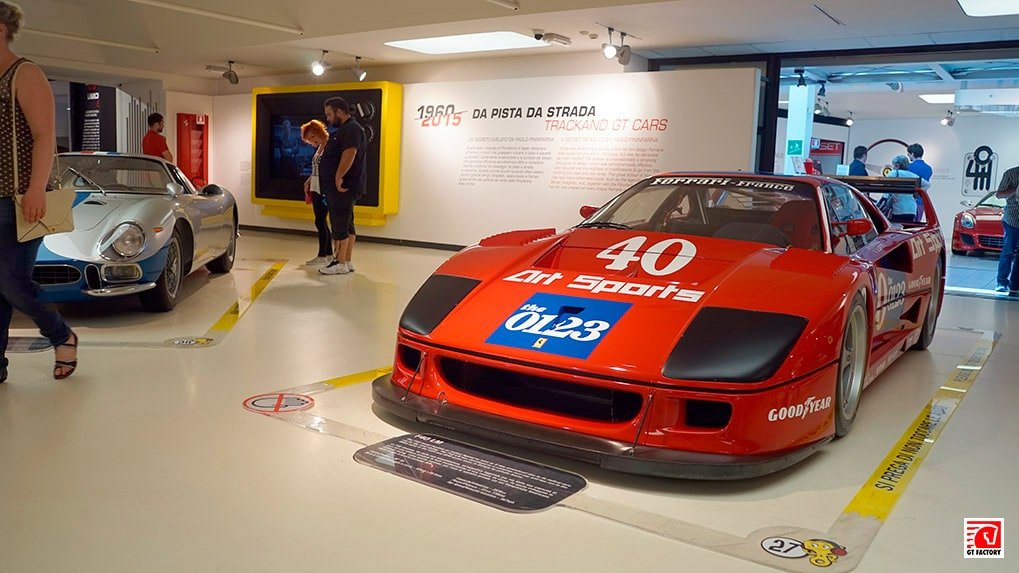
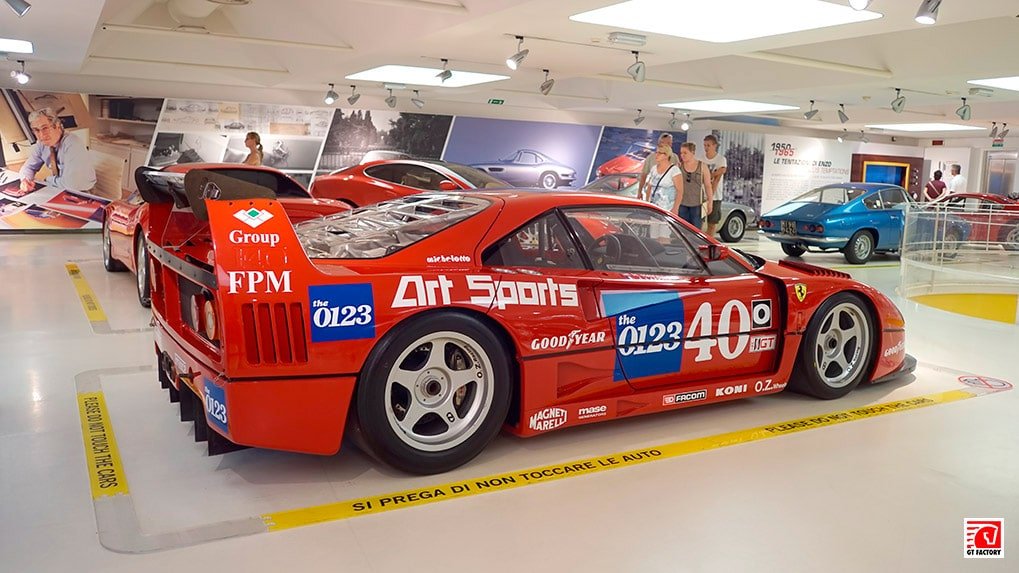
Although the Ferrari F40 was not originally intended for racing, a modified version debuted in IMSA competition at Laguna Seca in 1989 in the GTO class. Jean Alesi finished third behind two all-wheel-drive Audi 90s.
Despite the lack of official factory support, the car went on to complete a successful season with drivers such as Jean-Pierre Jabouille, Jacques Laffite, and Hurley Haywood. Together, they collected three second-place finishes and one third-place result.
Even though the F40 did not continue in IMSA the following season, it later became popular with private teams in several GT racing series, including JGTC. In 1994, the car entered international competition with Strandell in the BPR Global GT Series and won the 4 Hours of Vallelunga. Then, in 1995, the number of Ferrari F40s grew to four across independent teams such as Aldix Racing and Strandell. The model won the 4 Hours of Anderstorp, struggled against the McLaren F1 GTR, returned once more in 1996, repeated its Anderstorp victory, and then disappeared from GT competition.
Road Car Icons
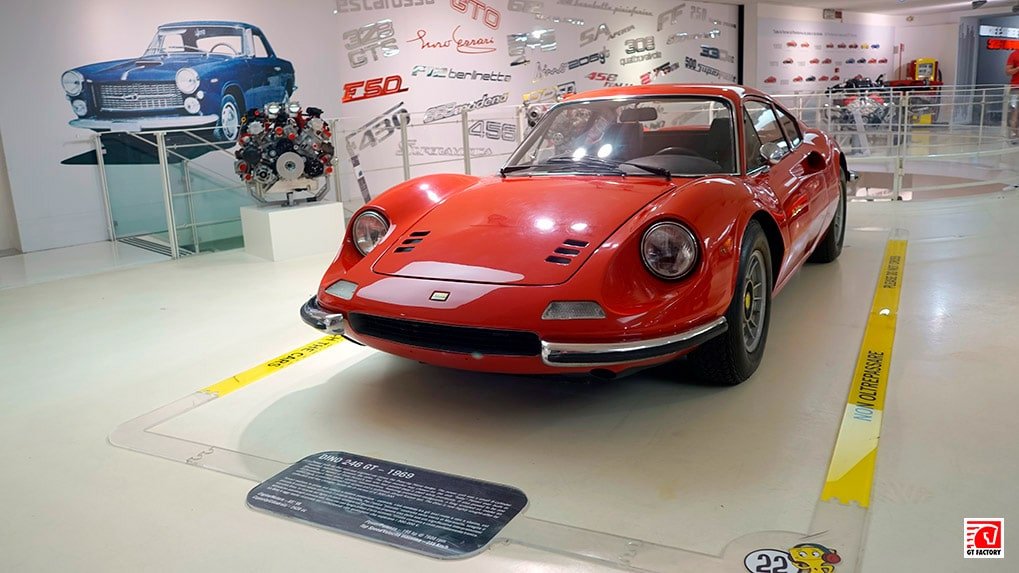
The 1969 Ferrari Dino 246 GT became the first Ferrari without the prancing horse on its hood. This more powerful Dino replaced the 206 GT and used a 2.4-liter V6 producing 195 hp at 7,600 rpm.
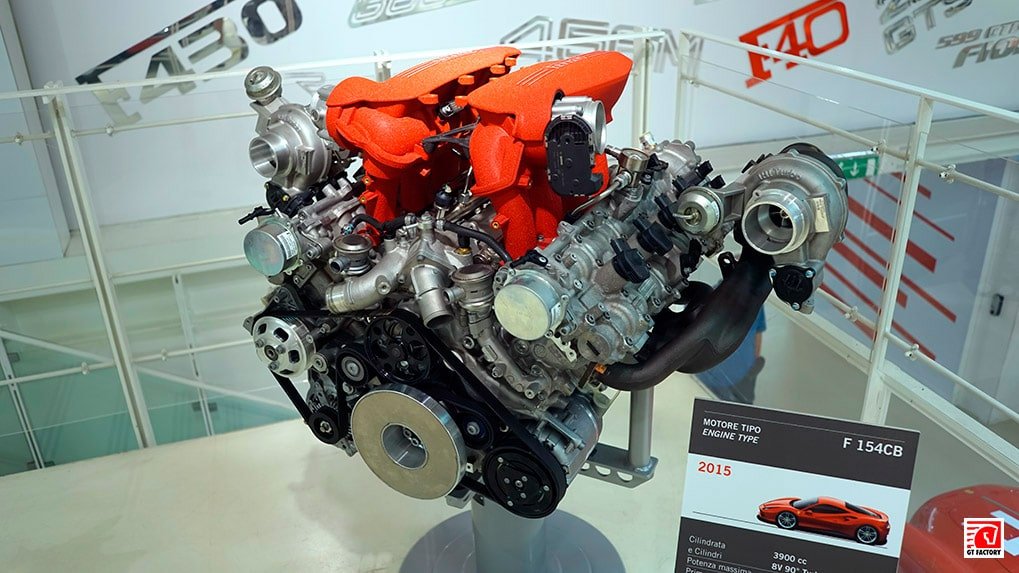
One of the newest engines on display represented a very different era. Here, it was the turbocharged 3,900 cc V8 known as the F154 CB, installed in the Ferrari 488.
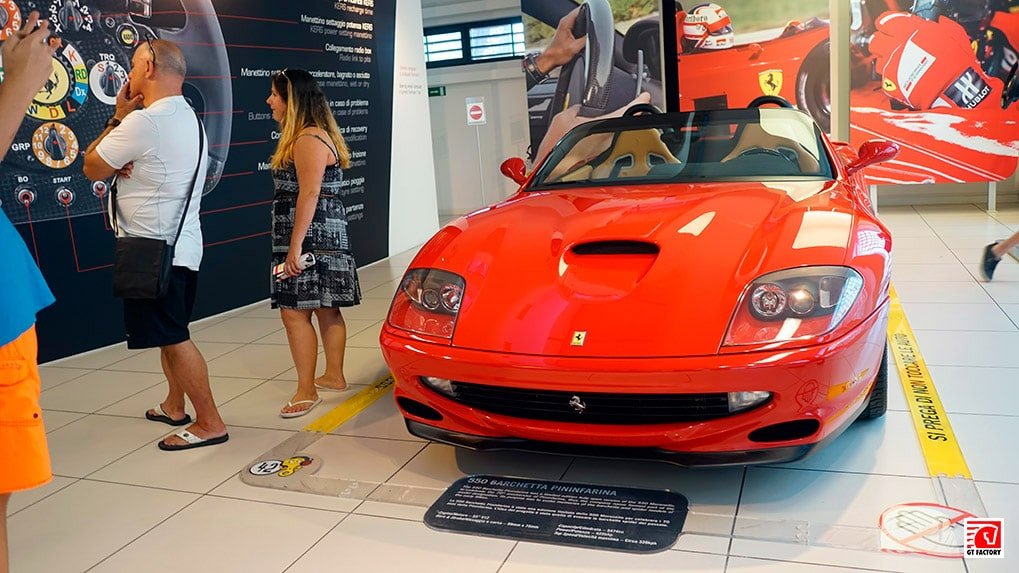
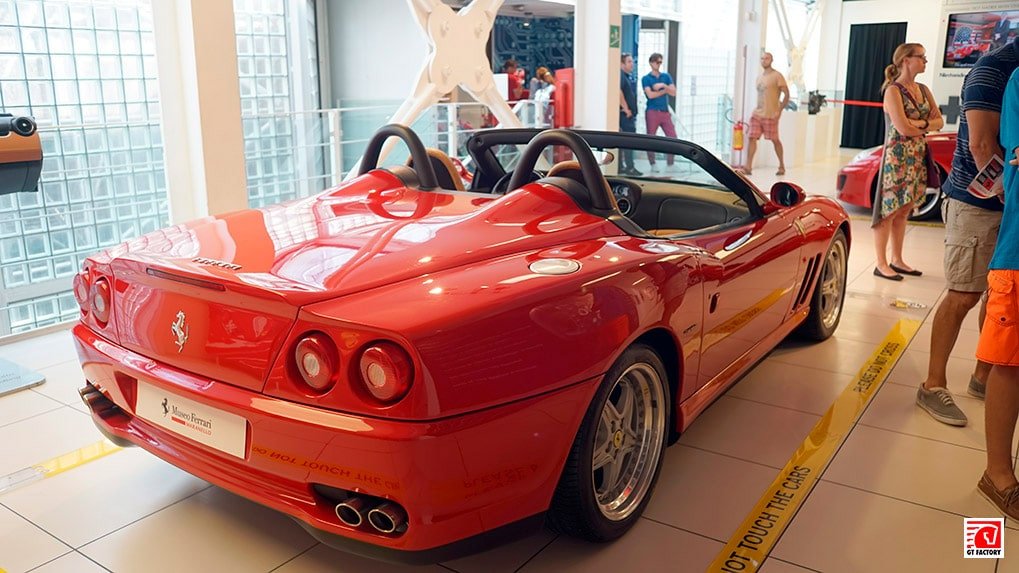
Finally, the Ferrari 550 Barchetta Pininfarina was a limited fully open version based on the 550 Maranello coupe. It was built to mark the 70th anniversary of the Pininfarina design house.
I will continue this museum walk in the next entry. So stay tuned for Part 3. As with the first article, this series is meant not only to document the visit, but also to show how deeply Ferrari’s road cars, racing cars, and engineering culture are connected.
Part of the historical background in this entry was adapted from public reference sources, including Wikipedia, and reworked into GT Factory’s editorial format.
Follow GT Factory on Tumblr and Instagram to stay up to date with the continuation of this series.