

Reiter Engineering Gallardo Extenso GT3
An Unexpected Encounter in Germany
While in Germany, I had the chance to visit a work partner and his workshop. I did not expect to find an Italian bull waiting inside his garage, so its presence came as a real surprise. It was one of those moments that felt both shocking and deeply impressive at the same time.
A standard Lamborghini Gallardo no longer surprises anyone. However, a track version built to FIA GT3 regulations is a very different matter. And this was not just any GT3 Gallardo. It was the Gallardo Extenso GT3.

At first, I thought this entry would be nothing more than a personal impression of the car. That would probably have been interesting on its own. Still, once I started writing, it became clear that simple reactions were not enough.
So I began looking deeper into the Gallardo Extenso GT3 to avoid sounding superficial or missing important details. That research turned out to be worthwhile. I found solid background information on both the manufacturer and the car itself. As a result, this piece became a compact overview built around that research, my own photographs, and a short video.

Reiter Engineering
There is a company in Germany that has been building Lamborghini race cars for GT-class competition since 2000. To be more precise, the real story begins in 1996. Back then, Hans Reiter and his team started preparing his personal Lamborghini Diablo GT for competition use.
Later, in 2000, the company was officially founded under the name of its creator. Today it is known as Reiter Engineering GmbH & Co. KG. The company became the world’s only exclusive manufacturer of Lamborghini GT1 and GT3 race cars and one of the leading GT3 engineering firms with FIA approval.
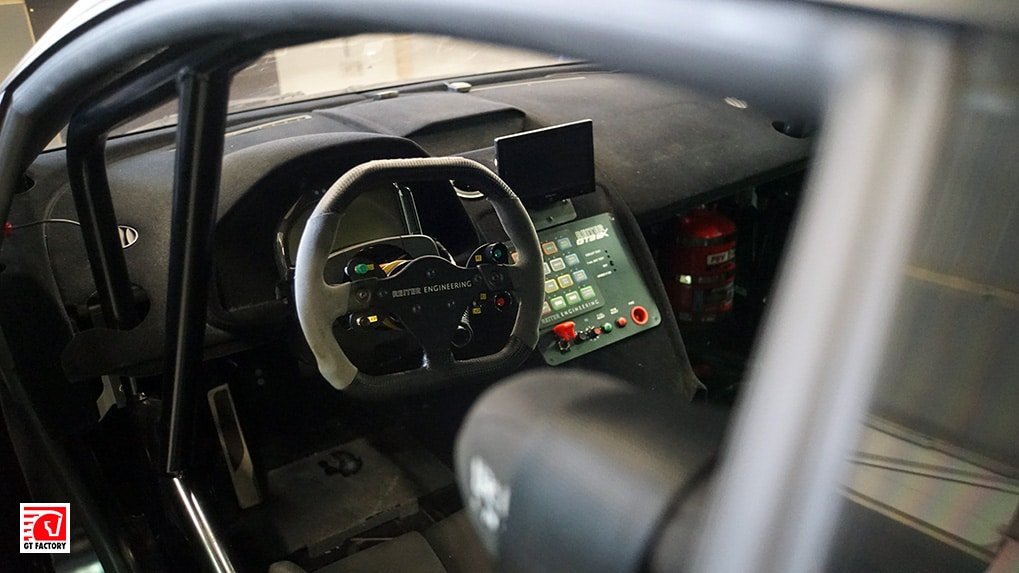
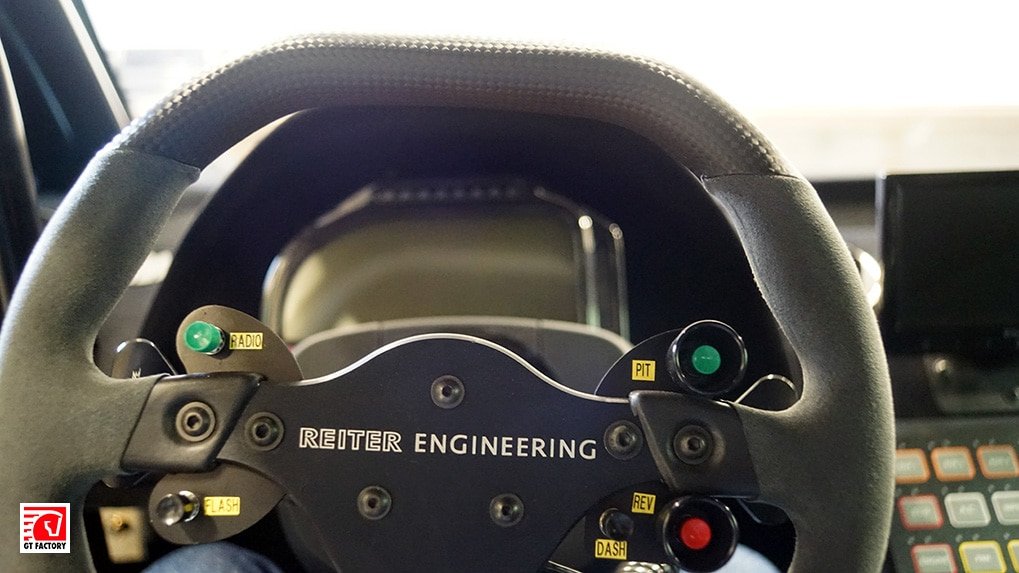
Hans Reiter’s company has prepared Lamborghini race cars for more than 100 clients competing in Europe, America, and Asia. From that experience came the next step in the evolution of Lamborghini’s V10 race cars: the wider Reiter Gallardo Extenso, better known as the R-EX.
The new car reached a maximum width of 205 cm and replaced the Gallardo GT3 FL2. Although it was wider than the previous Reiter GT3 car, the R-EX still complied with FIA regulations. Starting in 2015, it could already be seen in Blancpain GT Series, the US Pirelli World Challenge, and SRO GT Sports Club competition.

Wider Body, Revised Chassis
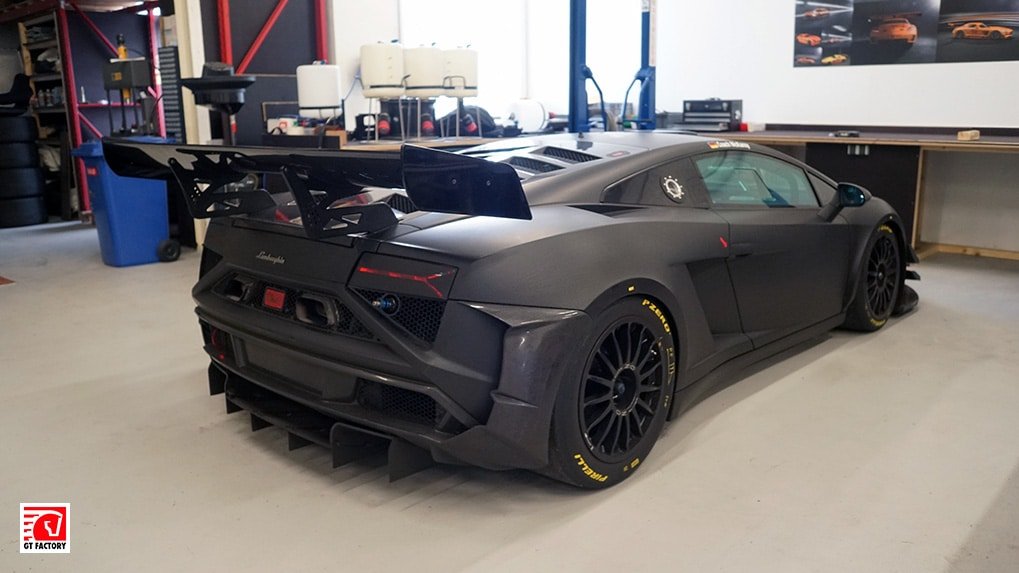
At the rear, the original aluminum quarter panels were replaced by wider carbon fiber pieces. The car also received rear control arms that were 13 cm longer. That change significantly improved handling. At the same time, the wider body gave the R-EX an even more aggressive appearance.

An improved torque curve came from the use of racing camshafts. In combination with new forged Mahle pistons, the engine also gained better reliability while fuel consumption was reduced.
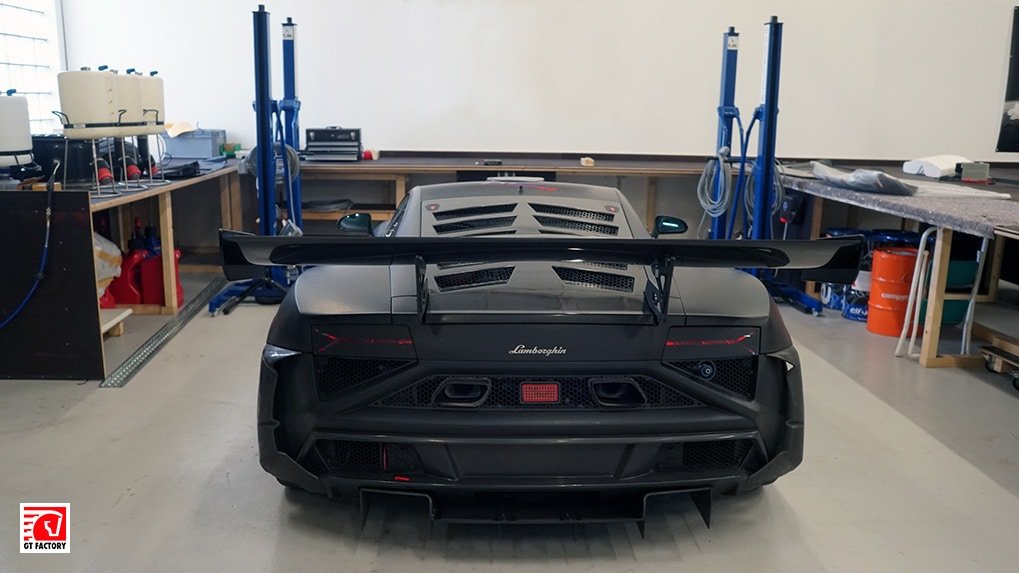
The R-EX was not defined only by a wider rear section and more power. Its exhaust system made an equally strong impression and matched the aggressive character of the car as a whole. From some angles, it even recalled the exhaust layout of the McLaren 650S.
Naturally, I could not resist asking to hear it in action. So we started the car and recorded a short video.
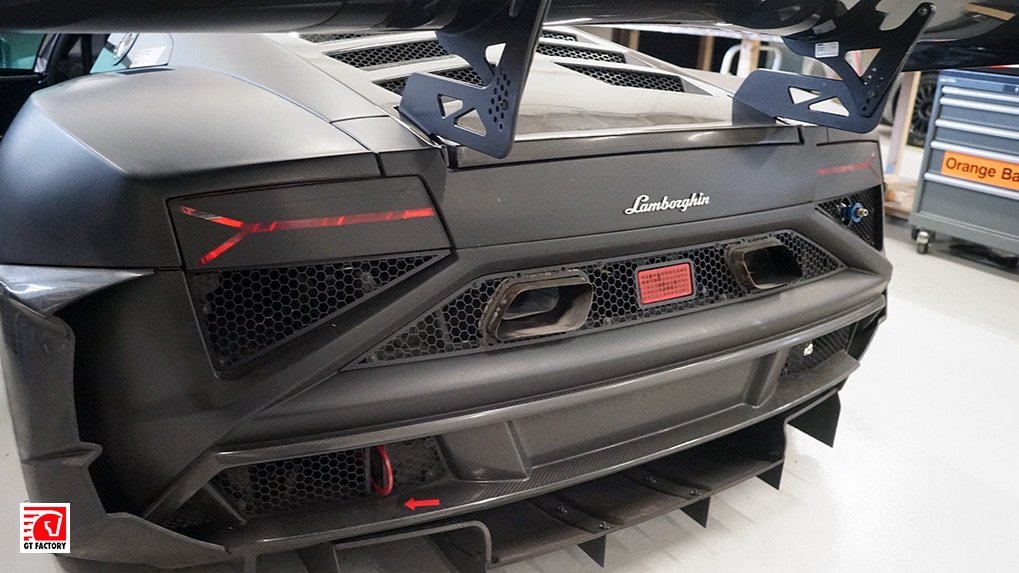
Beyond that, Reiter Engineering fitted new headlights, new taillights, and fully carbon fiber rear body sections that visually echoed the legendary Reiter Murciélago R-SV GT1, one of the most dramatic V12 race cars ever built. Thanks to those changes, the company reduced the car’s weight from 1,190 kg to 1,175 kg.
Why Reiter Stayed with the Gallardo
When Hans Reiter was asked about the new Huracán and why he had still chosen to continue developing the Gallardo, his answer was simple and logical. By that point, more than 100 racing Lamborghinis prepared by Reiter Engineering had already left the workshops in Kirchanschöring, Bavaria.
Those cars had collected more than 200 victories and over 400 podium finishes. In his view, that was enough proof that the Gallardo remained an extremely strong foundation for GT3 racing, not only in 2015 but for the years ahead as well.
He also explained that, much like in the aviation industry, the company preferred gradual evolutionary development rather than revolutionary change. Reliability and durability came first. According to Reiter, no Gallardo engine built by the company since 2012 had suffered complete failure.
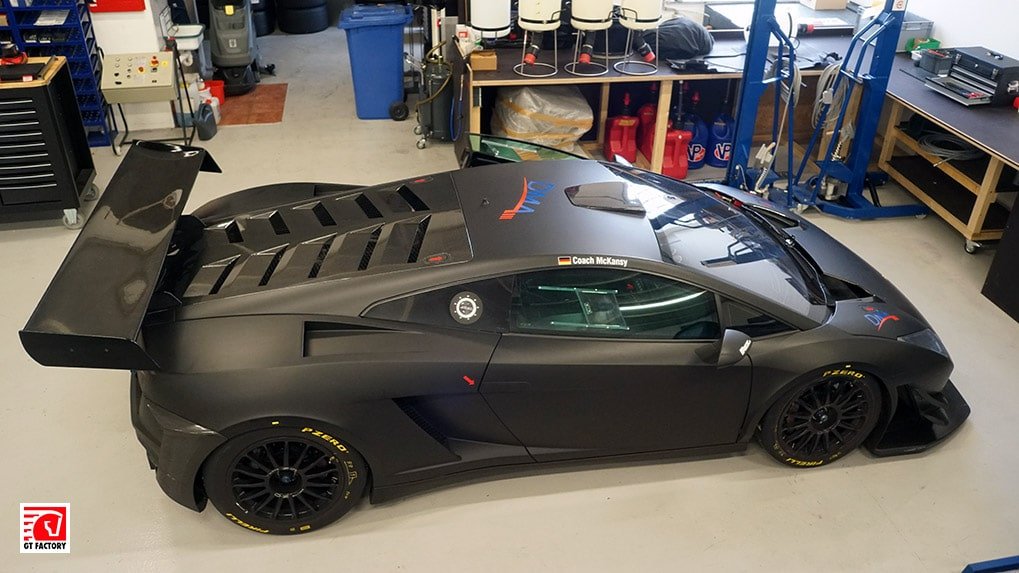
A total of 10 Reiter Gallardo Extenso R-EX cars were planned for production, each priced at €248,000. That figure included the 24-hour package and a choice of finish: exposed carbon or titanium gray.
The carbon-black version used aluminum doors and roof panels, while the remaining body sections were produced from raw carbon fiber. Meanwhile, the titanium-gray cars were painted in a specially selected shade intended to emphasize the car’s sharp and aggressive form.
If you enjoyed this article, sharing it with friends or fellow enthusiasts would be greatly appreciated. Follow GT Factory on Tumblr and Instagram.