
Lamborghini Museum in Italy. Part 1
First Impressions in Sant’Agata Bolognese
While in Sant’Agata Bolognese, I visited the Lamborghini factory and, of course, the Lamborghini Museum. What follows is a virtual walk through that space. Online photos can never fully match what you see in person, so if you ever have the chance to visit, it is worth it.
It is not the BMW Museum, or the Porsche Museum, and certainly not the Mercedes-Benz Museum. Even so, Lamborghini has earned its place over the years. Within its own niche, the brand built a reputation strong enough to stand among the most respected names in the automotive world.
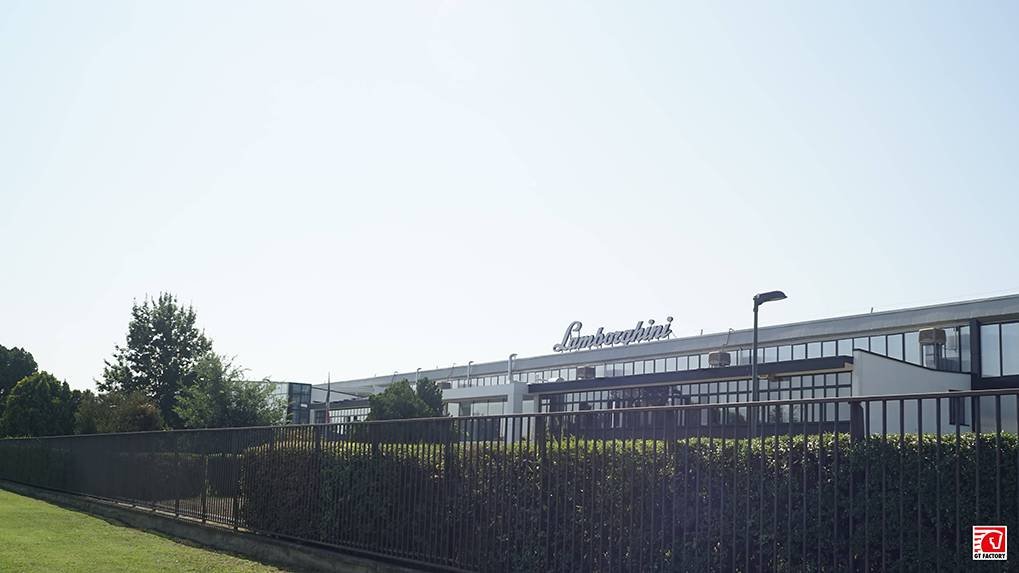
The Lamborghini Museum stands on the factory grounds, and among the museums I have visited, it is probably the smallest. The brand’s history is a little over fifty years long, which is not much on a historical scale. Still, there is plenty here worth seeing.
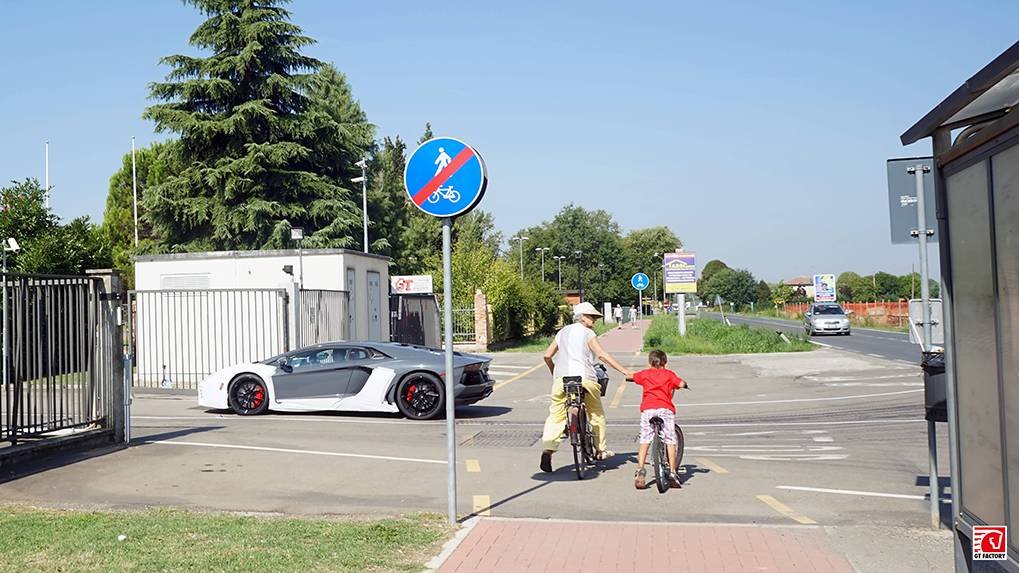
From time to time, brand-new cars circle the building outside. That is exactly why many new Lamborghinis leave the factory with around 70 to 75 km already showing on the odometer.
The welcome wall in the entrance hall makes it clear that visitors are expected. Admission cost 13 euros. There was also a combined ticket with a factory tour, but I learned about that too late. It required an online request at least a day in advance. So, without the factory tour, it was time to start exploring the exhibition itself.
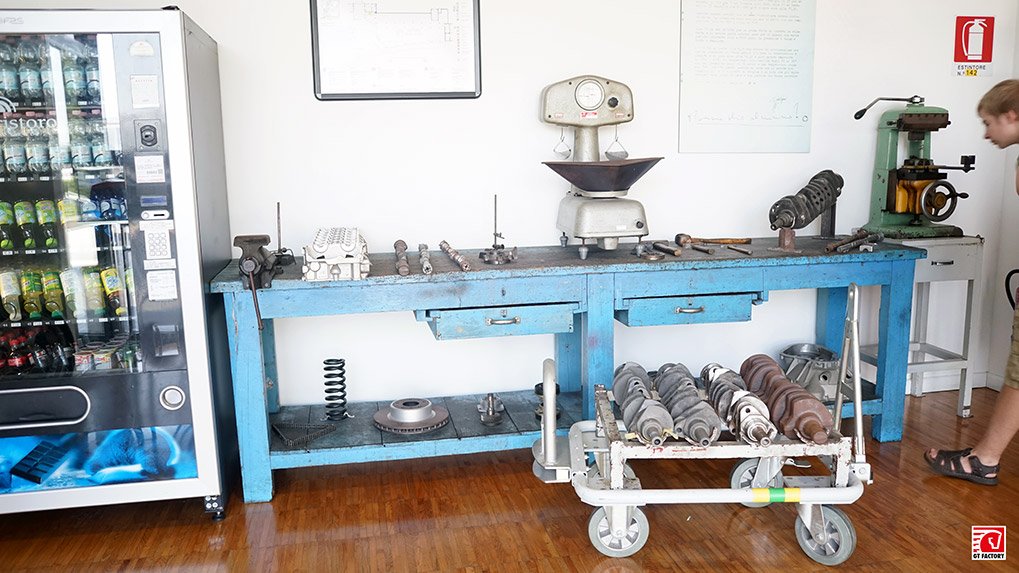
The Ground Floor Collection
The first floor concentrates on historical exhibits, objects, and fragments of early factory workspaces from Lamborghini’s first years as a manufacturer of sports cars.
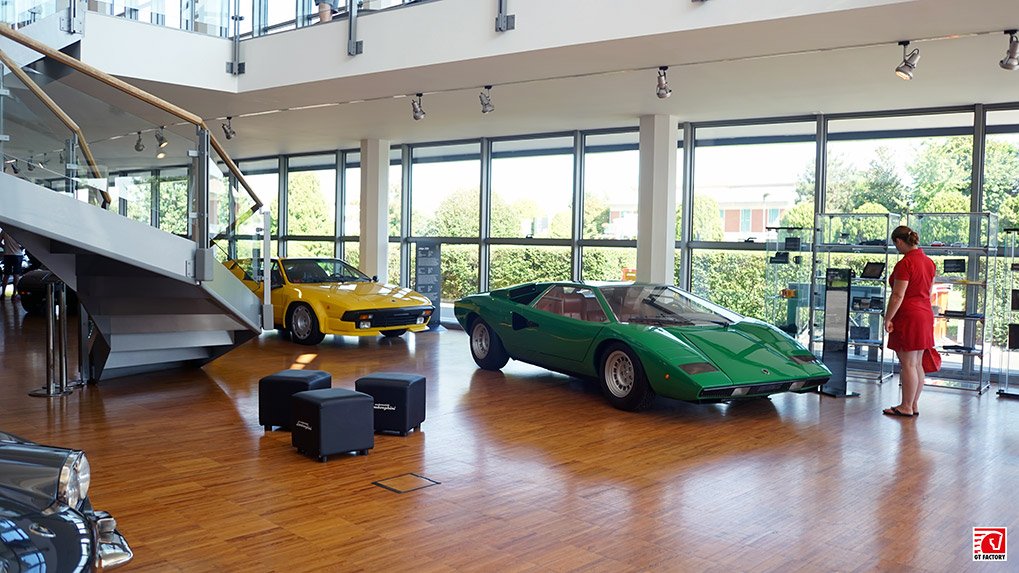
The ground floor display begins with the 350 GT and 400 GT models and runs through to the Diablo GT. In one of the scenes, a woman standing in front of the Countach looked as if she was trying to provoke the bull.
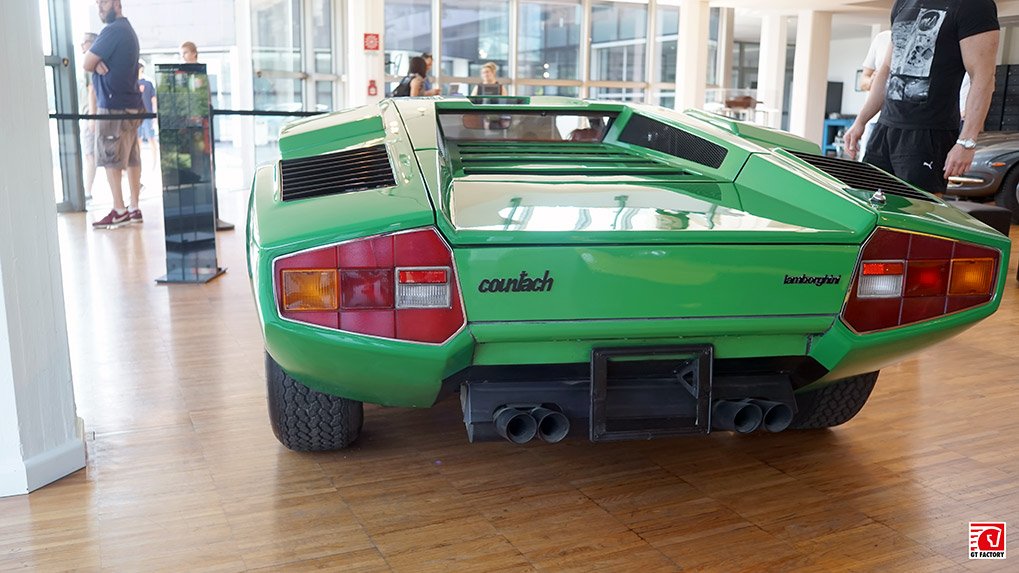
Unlike most Lamborghini model names, Countach does not come from the world of bullfighting. As the Italians themselves explained to me, “Countach” is a local expression from the Piedmontese dialect used for sudden amazement. The clean translation is less important than the effect: it is the kind of word people say when something leaves them genuinely stunned.
400 GT 2+2 and Early Grand Tourers
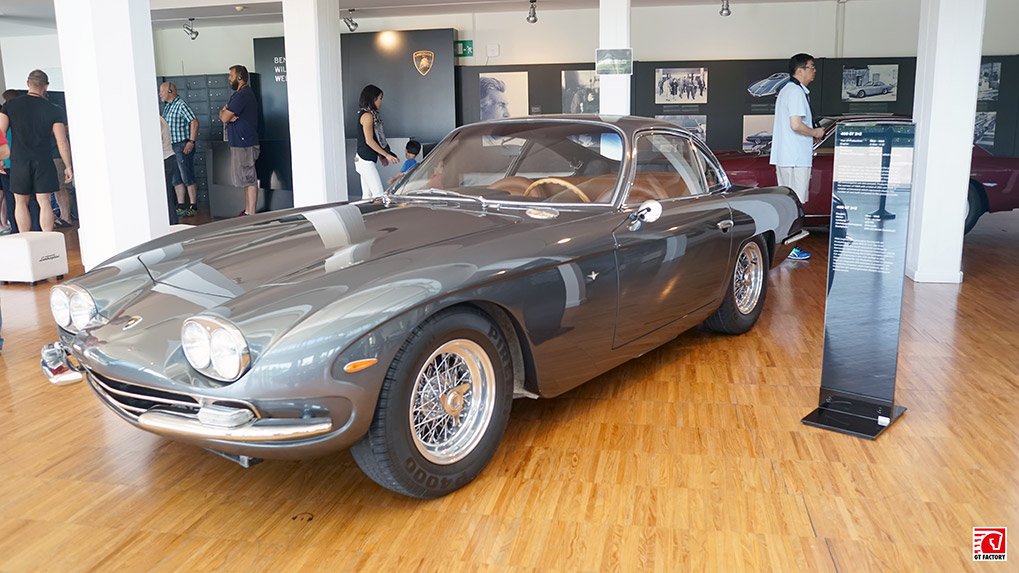
One of the most attractive historic cars in the museum was the Lamborghini 400 GT 2+2. From the front, the design may still feel a little debatable today.
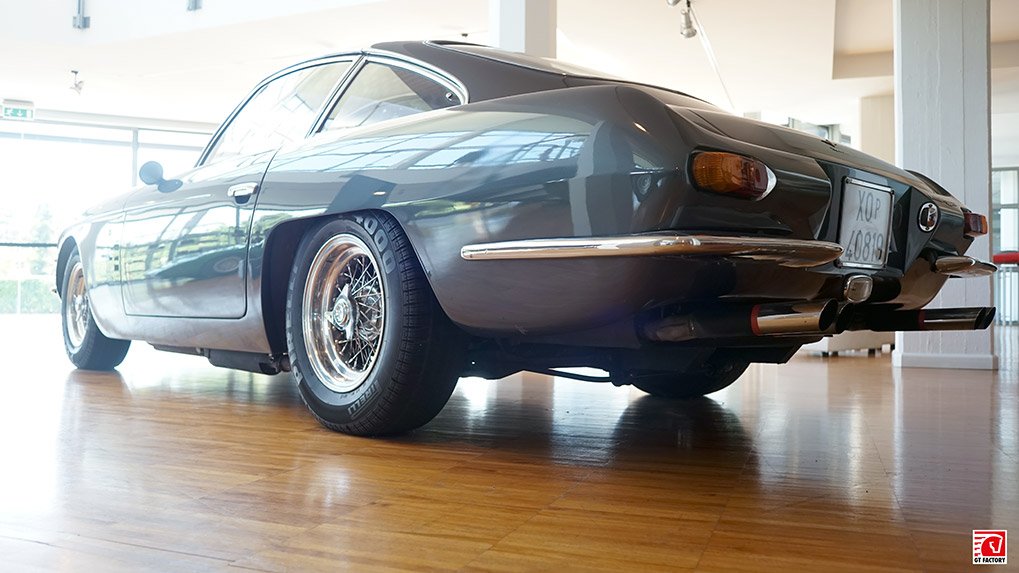
From the rear, however, it is simply beautiful. That period clearly had its own visual language. Aston Martin DB4, DB5, and Ferrari 250 GTO all shared something of that same proportion and elegance.
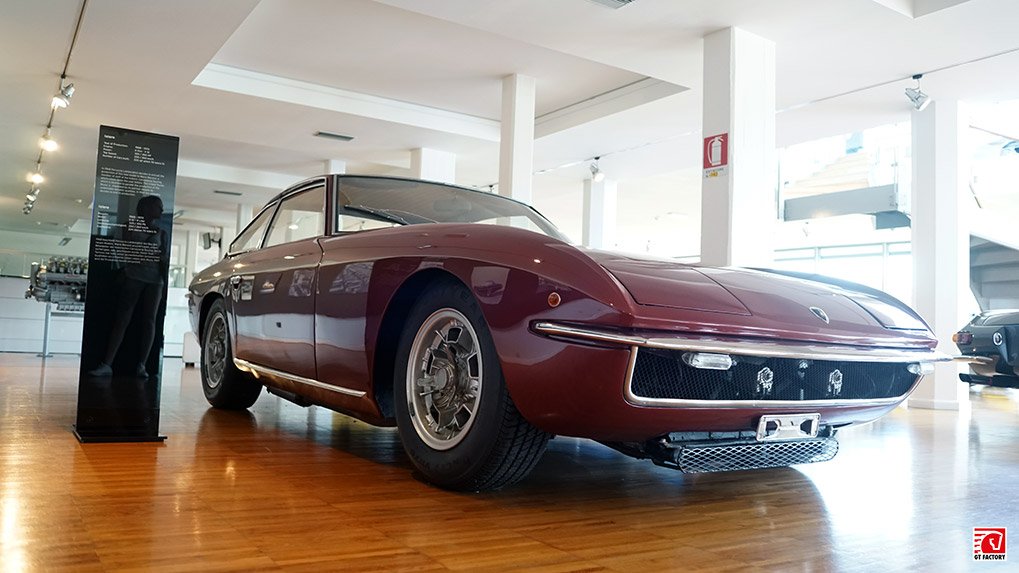
The Islero was produced only briefly, from 1968 to 1970. It replaced the 400 GT and was built in just 225 examples, including 70 Islero S versions. Powered by a 4.0-liter V12, it reached around 250 to 260 km/h.
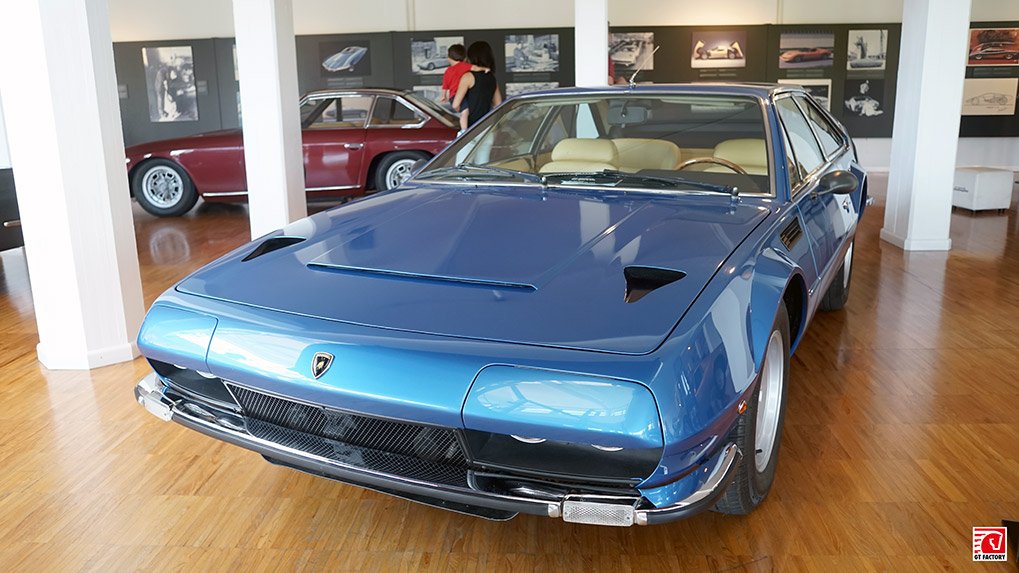
The Jarama 400 GT 2+2 remained in production until 1976 and carried forward Lamborghini’s front-engined grand touring tradition.
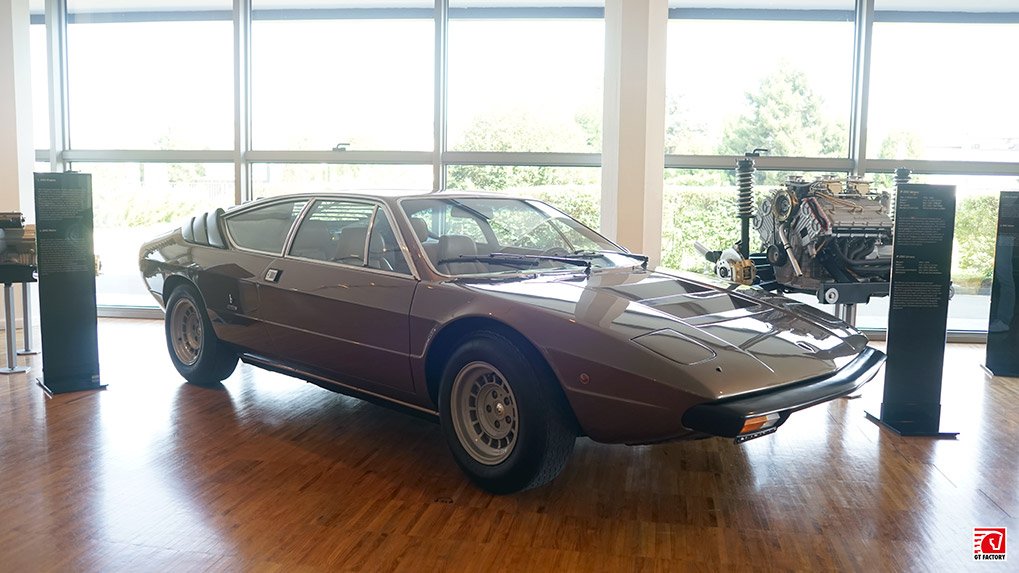
The museum also displayed the Urraco, effectively the spiritual predecessor of the later Gallardo and Huracán. In 1972, Marcello Gandini of Bertone created the design for Ferruccio Lamborghini. The model served as a more affordable alternative to the Miura and used an all-new V8 engine.
Miura and Miura SV
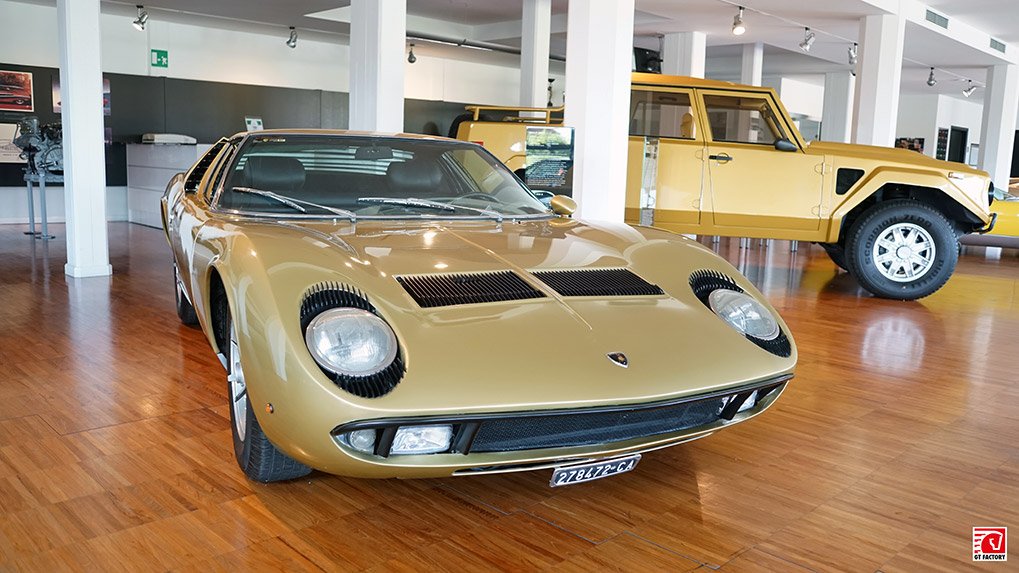
The Miura remains one of my favorite Lamborghinis. Produced from 1966 to 1969, it fundamentally changed the world’s idea of what a supercar could be.
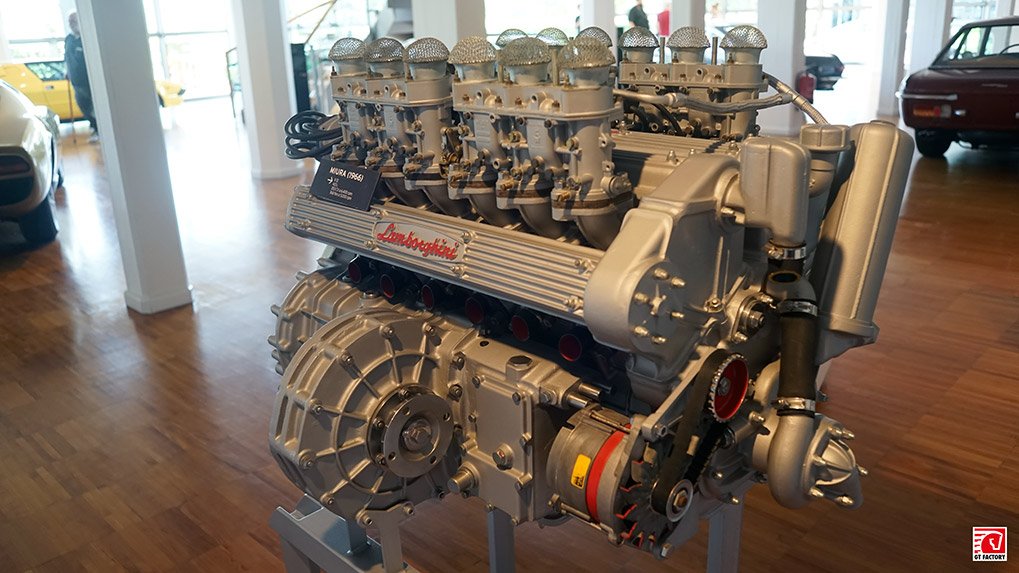
Its 4.0-liter mid-mounted V12 produced a remarkable 350 hp and 368 Nm of torque for the time. The car reached 100 km/h in 6.7 seconds and could continue on to 280 km/h.
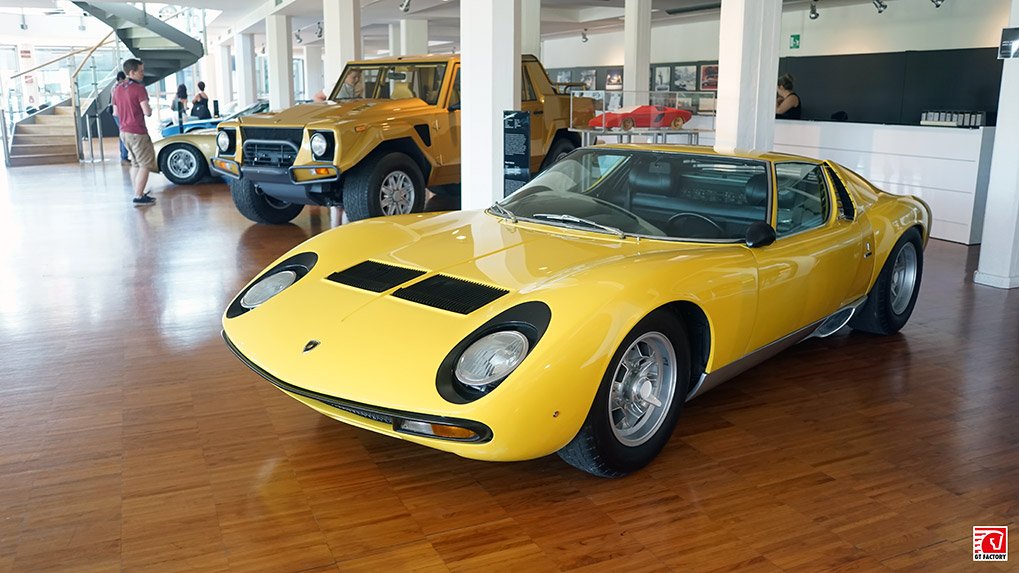
Over three years, Lamborghini built 475 examples of the original 350 hp Miura. Later came the more powerful Miura S versions, and after that the SV models, with 385 hp engines, separate lubrication systems for the engine and gearbox, and wider rear body sections.
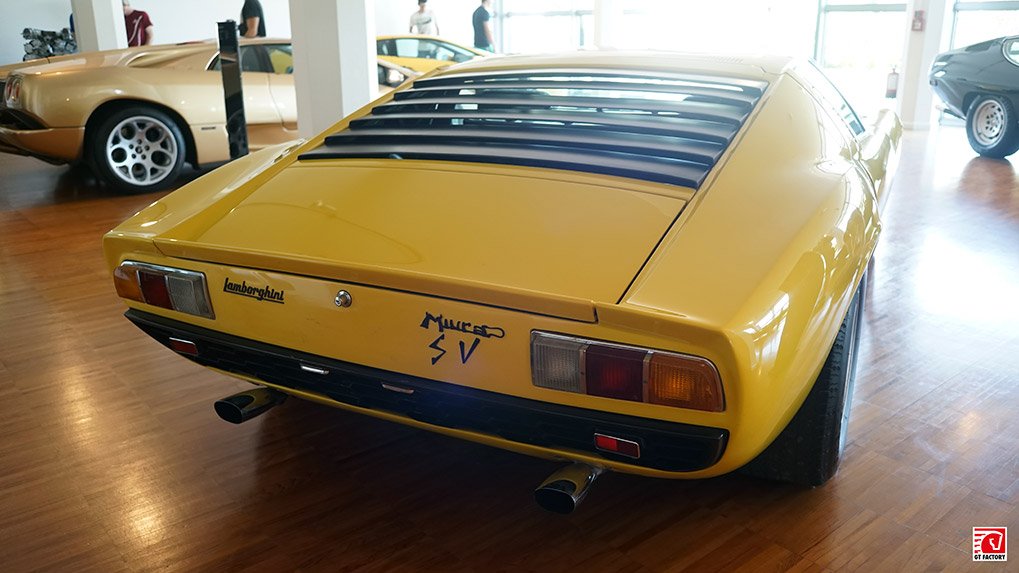
The yellow car shown in the museum was a Miura SV. Finding such an example today is both extremely difficult and extremely expensive.
LM002
Then there was the LM002, one of the strangest and most memorable creations ever to come out of Sant’Agata Bolognese. To this day, it remains Lamborghini’s first true production SUV. It was first shown to the public at the Brussels Motor Show in 1986, and 301 examples were built between 1986 and 1993.
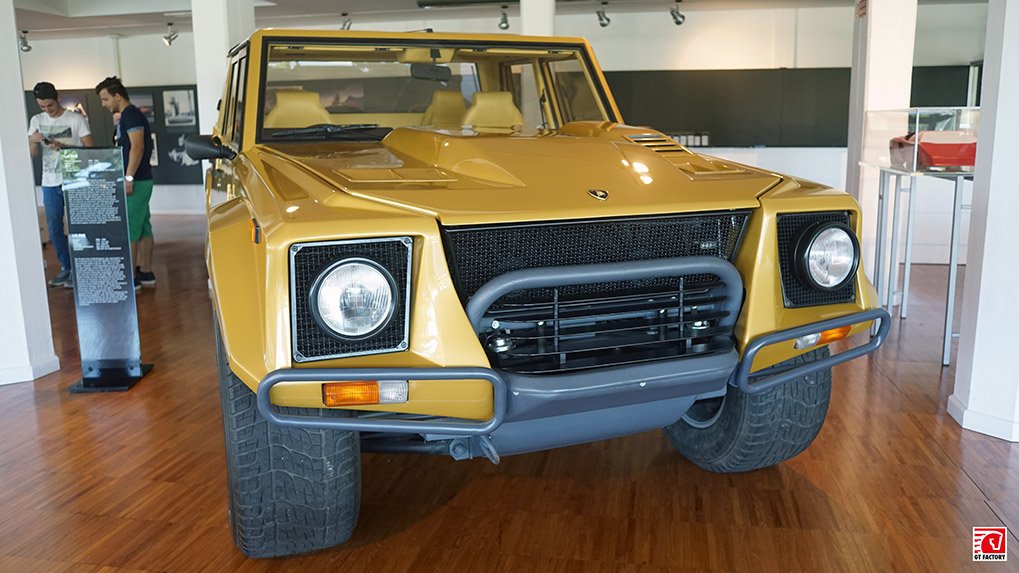
The first time I saw one in person was back in 2002 in Moscow, near Aeroport metro station. The example I saw then was black, and the impression stayed with me.
Some historic Lamborghini models were not present in the museum for reasons I do not know. The Diablo still feels closer to the modern era than to the truly historic one, so I left it for the next part of this museum series. Follow GT Factory on Tumblr and Instagram so you do not miss Part 2.